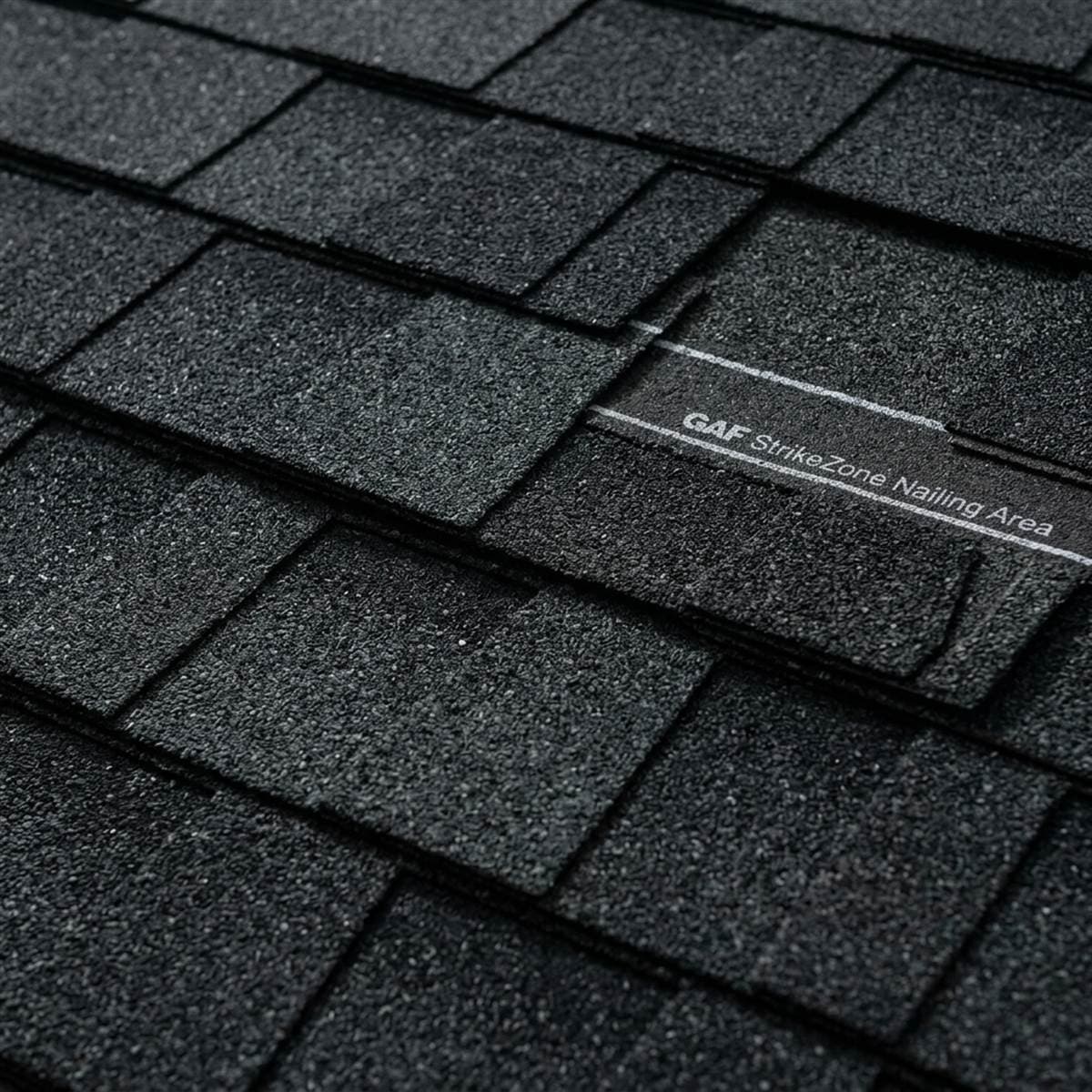
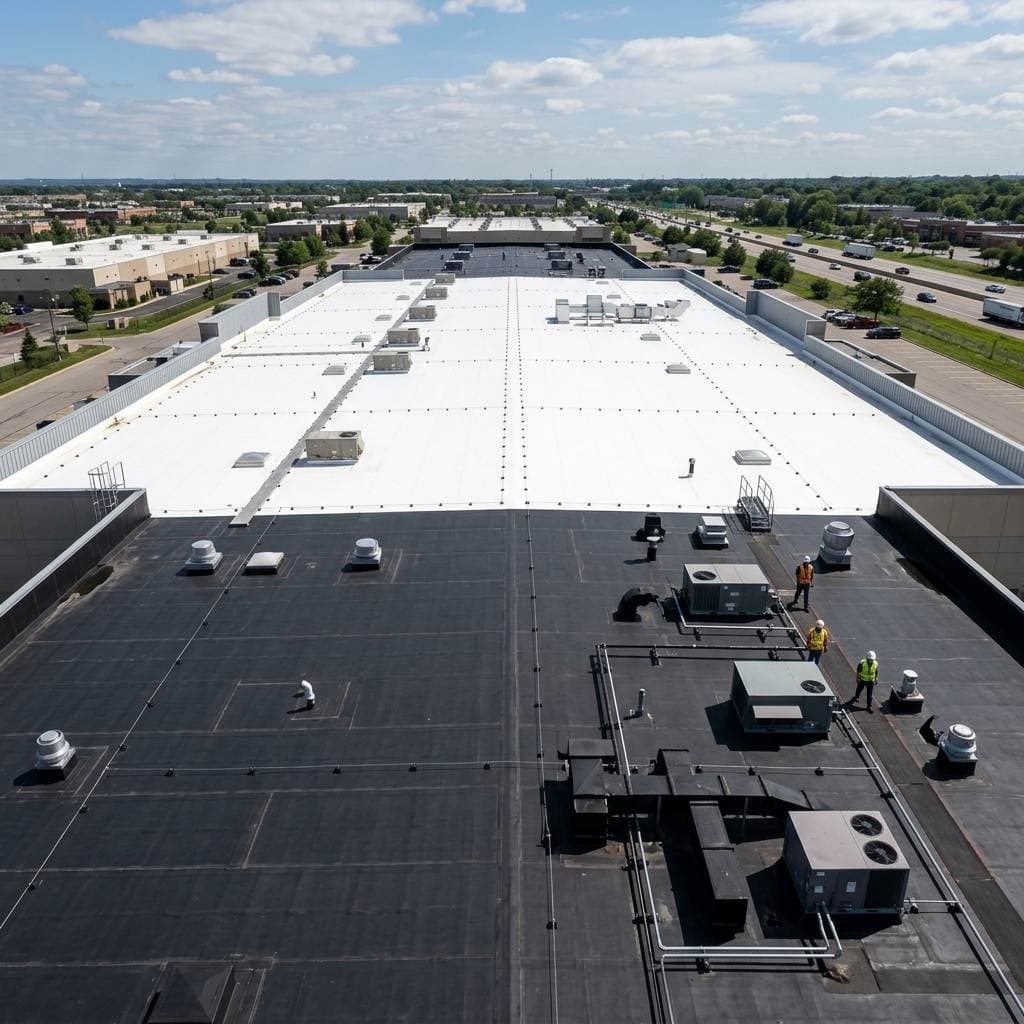
If you run a commercial building in South Florida, picking the right flat roof membrane is the most critical decision you make for your facility. If it fails, your inventory, equipment, and structural assets are instantly ruined. Unlike a steeply sloped residential roof that sheds water quickly, commercial structures feature massive, low-slope decks where water sits. We break down the real-world performance of the top three flat roof materials—TPO, PVC, and EPDM. Read this before you sign a contract for your next commercial project.
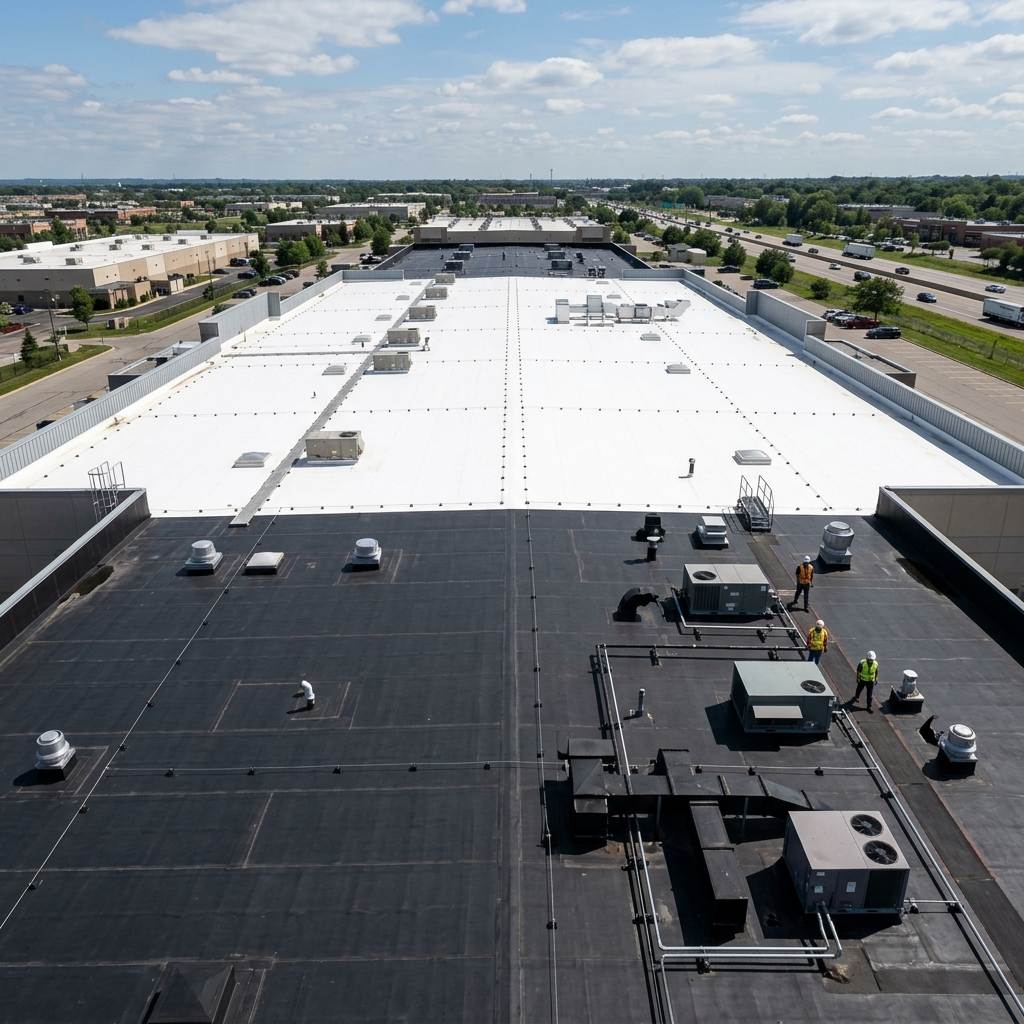
Thermoplastic Polyolefin (TPO) for a Commercial flat roof
TPO is currently dominating the commercial roofing market across North America. Engineered from a blend of ethylene-propylene rubber and polypropylene, TPO rolls out in massive single-ply sheets, usually 5 to 10 feet wide.
To build a high-efficiency system, roofing crews lay TPO directly over rigid polyisocyanurate (polyiso) insulation boards. These dense polyiso boards deliver massive thermal resistance (R-value) to stop heat transfer dead, while creating a perfectly smooth deck for the membrane. Installers can fully adhere TPO sheets using advanced, low-VOC liquid adhesives. These low-odor glues are mandatory if you are roofing an active hospital, school, or occupied office building where indoor air quality is tightly regulated. Whether mechanically attached or fully glued down, crews hot-air weld the seams together, fusing the plastic into a single, continuous sheet. The brilliant white surface of a TPO flat roof immediately slashes your building's energy costs. It reflects UV radiation back into the atmosphere, massively reducing the daily strain on your commercial HVAC system.
Polyvinyl Chloride (PVC) for a Commercial flat roof
PVC is the heavy-duty alternative. It is a highly reflective, single-ply membrane that delivers brutal durability and unmatched chemical resistance. Just like TPO, installers hot-air weld PVC seams to create an impenetrable, continuous waterproof barrier that laughs at tearing and punctures.
To keep the material flexible, manufacturers pack PVC membranes with chemical plasticizers. Here is the catch: cheap PVC sheets suffer from plasticizer migration. The softening chemicals literally bake out of the plastic under the Florida sun, leaving the membrane totally brittle and cracked. Premium PVC sheets use specialized polymers that lock those plasticizers in tight, guaranteeing the material stays flexible for decades. Plus, PVC boasts a true Class A fire rating. It will not support combustion. It self-extinguishes the second you remove the external flame. Most importantly, PVC ignores grease, animal fats, and chemical exhaust. That raw chemical resistance makes PVC the only real option for a restaurant flat roof. Kitchen exhaust fans pump boiling grease directly onto the roof deck. That grease will dissolve a rubber or asphalt roof in months, but PVC handles it easily.
Ethylene Propylene Diene Monomer (EPDM) for a Commercial flat roof
EPDM is the old-school workhorse. This synthetic rubber membrane has dominated commercial roofing for over 50 years. It is incredibly flexible, stretching and contracting effortlessly as the building shifts under thermal shock.
In some states, crews install EPDM using a ballasted method. They lay the rubber membrane loose over the deck insulation and dump tons of heavy river rock or concrete pavers on top to hold it down against wind uplift. While this method is cheap to install, the sheer weight requires serious structural engineering approval. While you can order it in white, EPDM is almost always black. The thick rubber surface of an EPDM flat roof provides elite protection against heavy hail impacts. But there is a major downside. Unlike the welded seams of TPO and PVC, EPDM seams are glued together using adhesive tapes. Those glued joints require constant maintenance and monitoring to ensure they don't peel apart in the Florida heat.
Cost Comparisons for a flat roof
Picking the right membrane means balancing your upfront budget against your long-term maintenance costs.
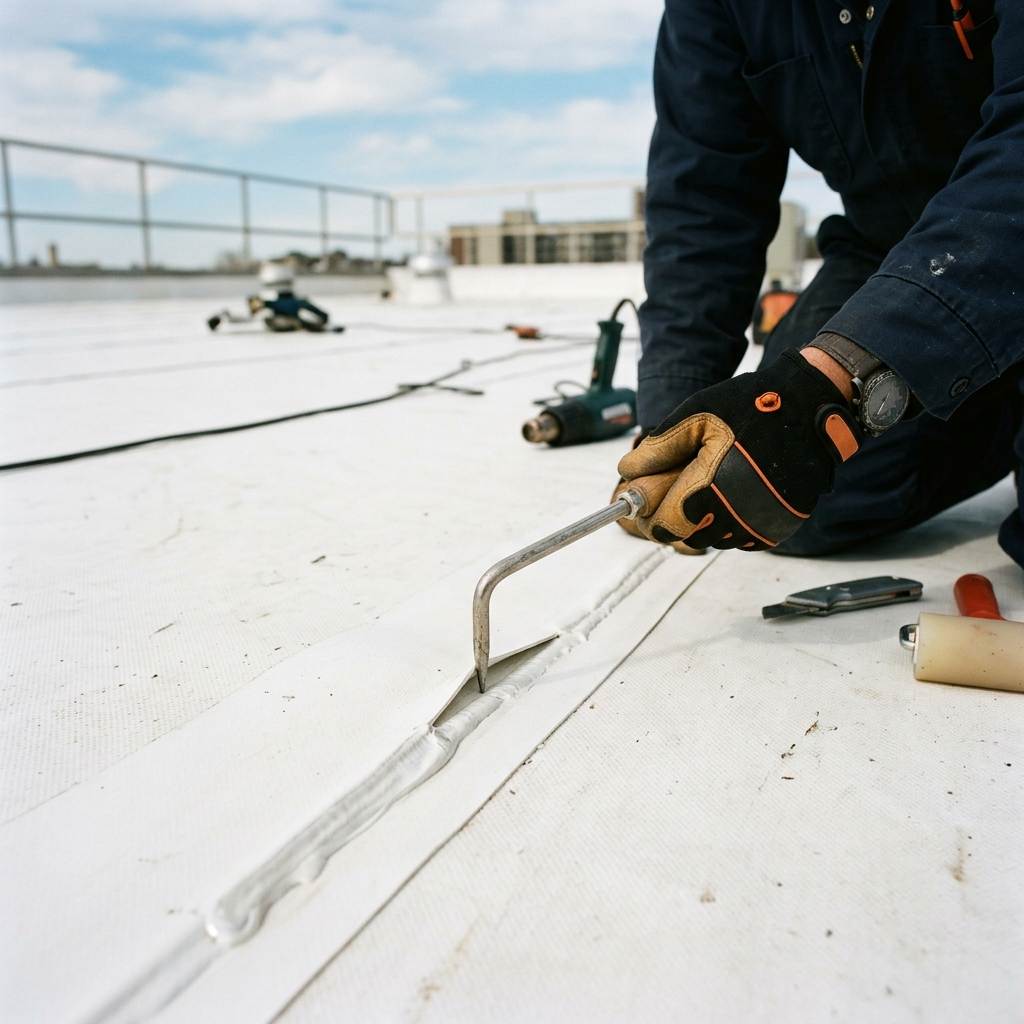
TPO gives you the most cost-effective reflective system on the market. PVC commands a premium price tag because its chemical resistance is untouchable. EPDM offers the lowest initial material cost, but the constant need to re-glue the seams drives up your lifetime expenses. You have to evaluate the long-term ROI before choosing a flat roof. Paying extra for hot-air welded seams upfront drastically reduces your risk of a catastrophic leak and a totally disrupted business.
Plan Your Commercial Roof Project
A rugged membrane is the foundation of a dry, profitable building. If you are comparing materials for a residential project, check out our breakdown on residential flat roof systems.
Want to keep your current roof alive? Read our ultimate checklist for flat roof maintenance to stop ponding water, and see the hard financial benefits of locking in a commercial roof maintenance plan to protect your wind warranty.
Secure Your Business with the Best Membrane
EPDM is a classic, but TPO and PVC are the modern standards for a highly efficient, leak-free flat roof. Fusing seams with 1,000-degree hot air guarantees a watertight deck that will survive the worst weather Florida can throw at it.
Call us today for a full evaluation of your commercial flat roof. Our certified crews will inspect your deck, break down the exact membrane options for your industry, and engineer a custom system to protect your assets.
Explore our professional TPO and PVC installation services.
[!TIP] Planning a Roof Replacement? Use our interactive Florida Roof Replacement Cost Calculator to get an instant satellite measurement and pricing estimate for your property.
Local Service Areas & Regional Coverage
Diversified Roofing Solutions provides certified residential and commercial roofing services across South Florida and the Treasure Coast, including Palm Beach County, Martin County, Broward County, and St. Lucie County.