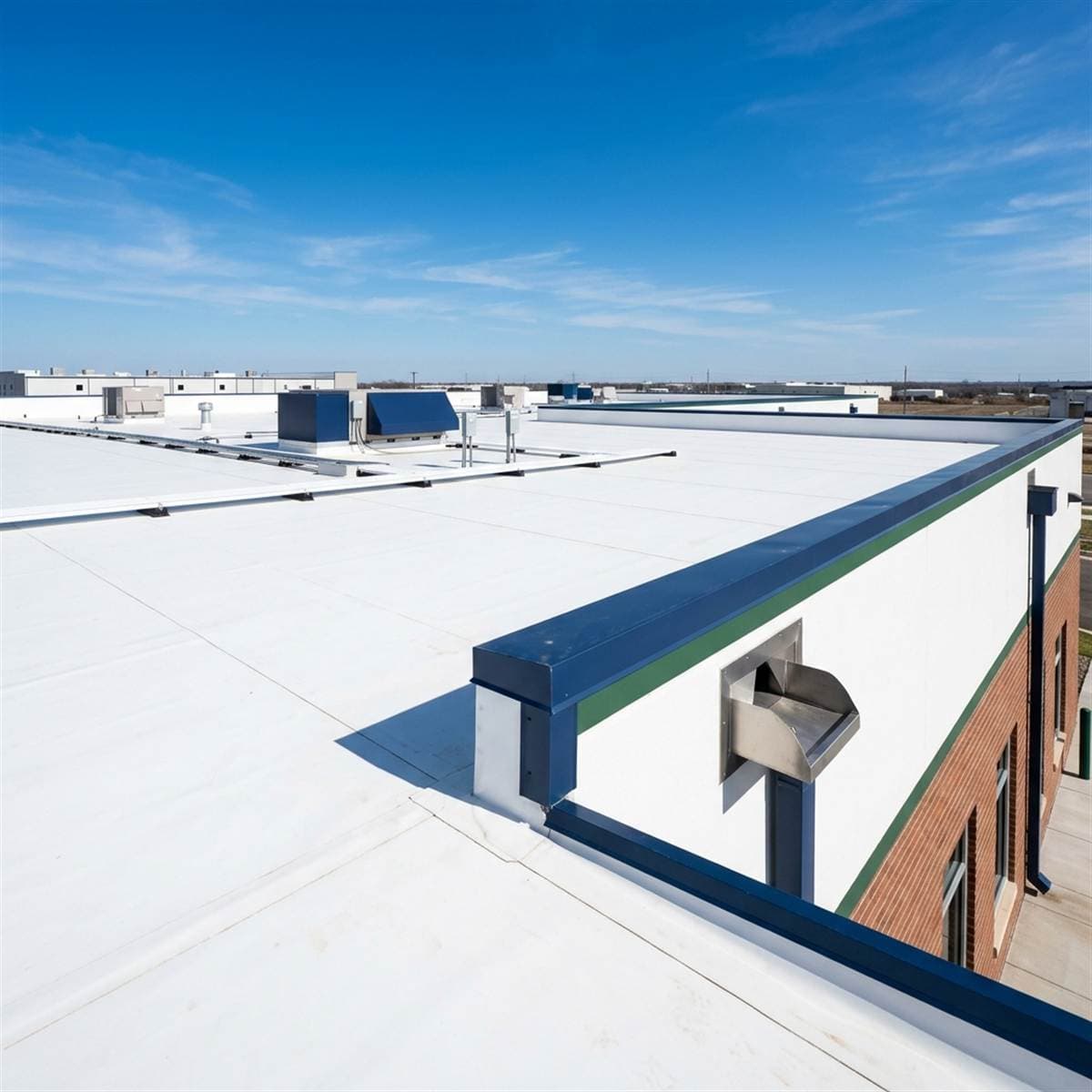
To protect your massive flat roof investment and avoid instantly voiding your manufacturer NDL (No Dollar Limit) warranty, you must execute a strict commercial TPO maintenance program. There is no way around it. Commercial TPO membranes deliver incredible heat reflectivity and durability, but they demand active care to stop seam separation and drainage clogs. A hard-nosed commercial TPO maintenance routine catches minor punctures and UV breakdown long before they destroy your interior ceiling grid. If you manage a building in Palm Beach, Martin, or Broward County, fully documented commercial TPO maintenance is the only way to survive a brutal warranty audit after the next hurricane.
Table of Contents
- Why Is Commercial TPO Maintenance Required for Warranties?
- Task 1: Clearing Scupper and Drain Blockages
- Task 2: Testing Seam Integrity and Weld Conditions
- Task 3: Inspecting Flashing Seals and Penetration Details
- Tasks 4 & 5: Removing Debris and Preparing for Storms
- Related Services
Why Is Commercial TPO Maintenance Required for Warranties?
Manufacturer warranties are written by lawyers. They explicitly require mandatory, documented inspections. If you ignore standard commercial TPO maintenance, the manufacturer will instantly invalidate your coverage the moment a clogged drain causes a leak.
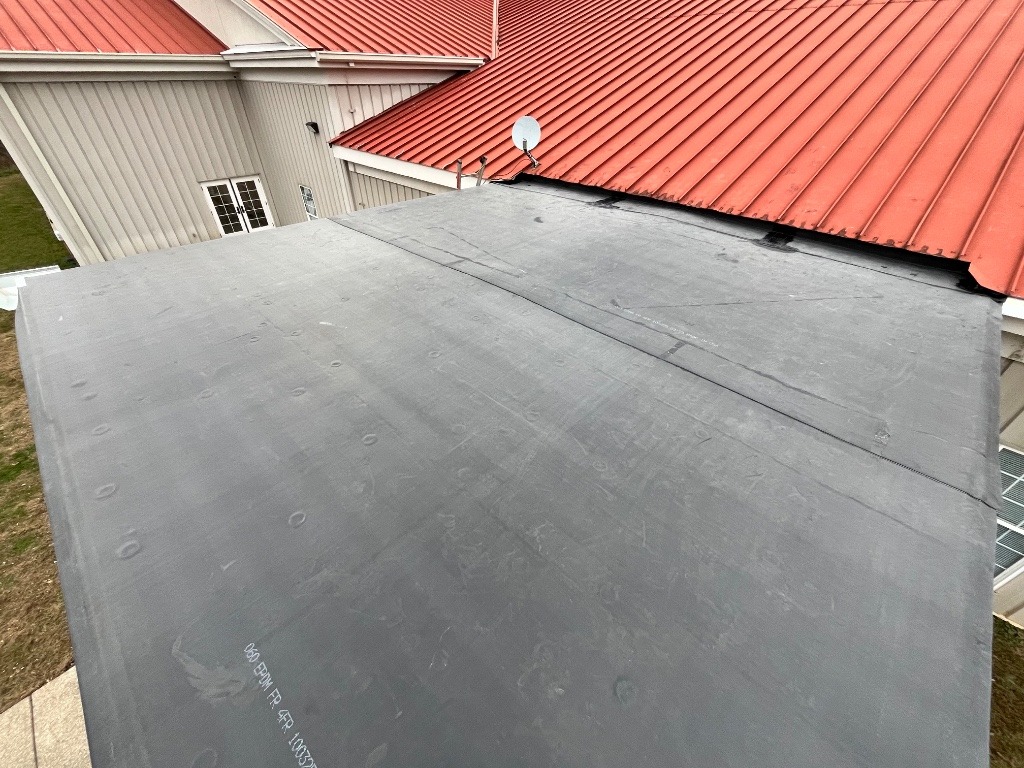
Standard NDL contracts strictly exclude any damage caused by ponding water. You have to be proactive.
The NDL Warranty Audit Process
When you finally file a hurricane damage claim, the manufacturer's adjuster will demand your historical inspection records. If you cannot produce a documented history of commercial TPO maintenance, they will deny your claim on the spot. Consistent maintenance protects your capital.
- Documented Audits: Force your roofer to inspect the deck twice a year (right before and right after hurricane season).
- Certified Technicians: Ensure every single patch uses factory-approved TPO flashing details.
- Fastener Checks: Have crews inspect the mechanical fastener plates locked under the membrane.
Task 1: Clearing Scupper and Drain Blockages
Standing water will eventually rot a TPO membrane. The absolute most important step of commercial TPO maintenance is clearing every ounce of organic debris out of your drains, gutters, and scuppers. Water must flow immediately off the roof after a heavy South Florida downpour.
Keeping your drains wide open stops water from pooling, which protects your steel deck from massive structural weight loads.
Preventing Standing Water Loads
Ponding water exerts crushing structural pressure on your flat deck. A serious commercial TPO maintenance audit identifies minor deck depressions. Crews level these low spots to stop pooling water from constantly stressing the welded seams.
Task 2: Testing Seam Integrity and Weld Conditions
During a professional commercial TPO maintenance run, certified technicians perform a physical seam probe. They drag a metal cotter pin tool hard along the heat-welded joints to expose hidden cold welds or micro-voids.
If the pin slips into a separation, that seam must be scrubbed clean and re-welded with a 1,000-degree hot-air tool to restore the watertight barrier.
Repairing Separated Seams Quickly
When a seam fails, roofers must patch it immediately using a hand welder and fresh, matching TPO material. Catching seam failures during routine commercial TPO maintenance stops the wind from peeling the roof completely off during a Category 3 storm.
Task 3: Inspecting Flashing Seals and Penetration Details
Penetrations are where leaks start. HVAC curbs, plumbing pipes, and exhaust vents are massive liabilities. Proper commercial TPO maintenance requires techs to dig into the pitch pans, sealant pockets, and target patches surrounding these critical junctions.
Any cracked, sun-baked sealant must be dug out and replaced with high-grade commercial polyurethane sealants to keep the building envelope sealed tight.
Tasks 4 & 5: Removing Debris and Preparing for Storms
Loose tree branches, rusted metal scraps, or abandoned HVAC parts left on your deck become flying missiles in high winds. Securing and removing this trash is a mandatory phase of commercial TPO maintenance before hurricane season officially kicks off.
Review this hit-list to verify your flat deck is actually storm-ready:
| Maintenance Task | Target Inspection Area | Quality Control Parameter | Warranty Requirement Status | Ideal Execution Frequency |
|---|---|---|---|---|
| Drain Cleaning | Drains, Scuppers, Gutters | Flow capacity cleared of organic debris | Mandatory (excl. ponding water) | Pre- & Post-Hurricane Season |
| Seam Probing | Heat-welded joints & overlaps | Zero structural separations or cold welds | Mandatory | Annually |
| Flashing Seal Checks | HVAC curbs, expansion joints | Flexible polyurethane seals intact | Mandatory | Annually |
| Debris Removal | Field membrane area | All loose branches & metal scraps removed | Mandatory (prevents punctures) | Semi-Annually |
| Coating Integrity | Silicone/Acrylic coating runs | Steady thickness without peeling | Optional (extends system life) | Every 5 Years |
Related Services
Ready to lock in a certified maintenance plan? Explore our commercial flat roofing resources:
- Schedule a consultation for Commercial Roof Replacement.
- Request certified audits for TPO Flat Roof Replacements.
- Restore aging commercial decks using premium Silicone Roof Coatings.
- Schedule leak investigations for Commercial Roof Repair.
Local Service Areas & Regional Coverage
Diversified Roofing Solutions provides certified residential and commercial roofing services across South Florida and the Treasure Coast, including Palm Beach County, Martin County, Broward County, and St. Lucie County.