When a massive hurricane finally clears the South Florida coast, securing rapid emergency roof repair in Palm Beach is the absolute most critical move you can make. The clock is ticking. High winds easily rip heavy tiles, shingles, or metal panels straight off your deck, leaving the raw wood sheathing totally exposed to the inevitable post-storm downpours.
If you do not act quickly, the water will destroy your drywall, ruin your flooring, and breed black mold in your attic. You have to mitigate the leaks and document the structural damage for your insurance carrier before it is too late. We break down exactly what you need to do the second the winds stop, how to safely lock in emergency roof repair in Palm Beach, and why heavy-duty tarping is your only line of defense until permanent repairs begin.
3 Immediate Steps to Take After Storm Damage
If you suspect your roof took a hit during a tropical storm, follow this exact protocol to protect your property and secure your insurance claim:
1. Document the Damage (Before Touching Anything)
The second it is safe to walk outside, grab your phone. Take high-resolution photos and video of the roof and any shattered debris sitting in your yard. Do not climb up there. Shoot it from the ground. If water is dripping inside your home, photograph the active leaks, the water stains on your ceiling, and any ruined furniture. This raw documentation is what forces your insurance carrier to pay the claim.
2. Arrange Emergency Tarping
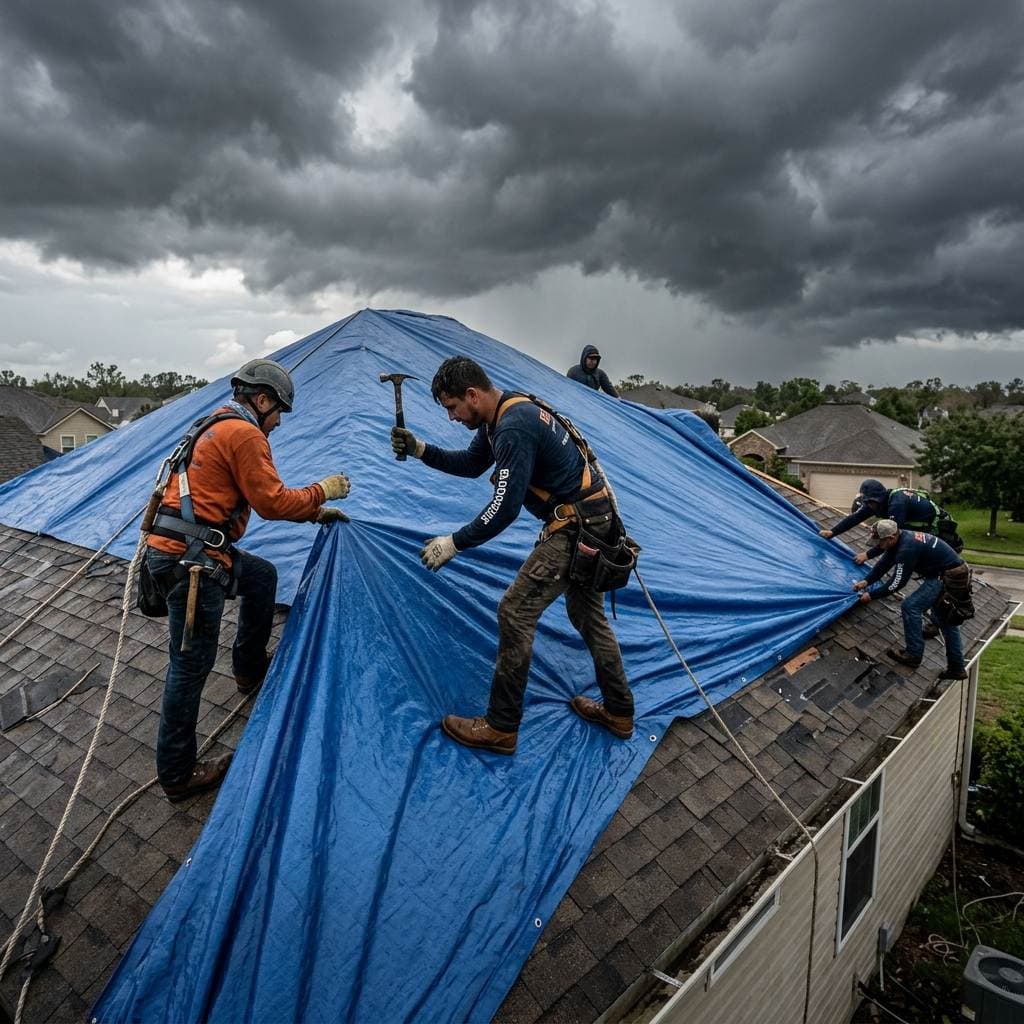
Your insurance policy actually requires you to mitigate further damage. You have to stop the bleeding. Getting a heavy-duty, reinforced blue tarp nailed down over the exposed decking is the industry-standard method for sealing leaks temporarily.
3. Contact a Licensed Local Contractor
Do not hire out-of-state "storm chasers." After a major hurricane hits Palm Beach County, unlicensed crews flood the neighborhoods offering cheap deals. They use garbage materials and vanish the second your roof starts leaking again. Always hire a state-certified, local roofing contractor who holds a valid, active Florida license (like CCC1330205).
The Hazards of DIY Tarping
You must stop the water. But you should never climb onto a wet, wind-damaged roof yourself. Damaged tile and shingle roofs are incredibly unstable, slippery, and present a massive fall hazard.
Our emergency crews deploy specialized safety gear to lock down tarps safely. They anchor the heavy plastic using rigid wooden batten strips, screwing them directly into the roof rafters. That guarantees the tarp will not rip off when the next afternoon thunderstorm rolls through.
Interlinking Your Storm Strategy
Being proactive before the storm hits is always the best defense. Before hurricane season officially starts, run through our hardcore hurricane season roof checklist to verify your flashing and vents are actually secure. If you are currently fighting a wind claim, learn exactly how the new legislation affects your payout in our guide to Florida roof replacement insurance claims.
For lightning-fast water mitigation and professional response, hit our residential roof repair services page or call our Jupiter headquarters directly at (561) 841-5676 to request an emergency dispatch.
Review our full scope of emergency leak mitigation services for catastrophic storm damage.
Local Service Areas & Regional Coverage
Diversified Roofing Solutions provides certified residential and commercial roofing services across South Florida and the Treasure Coast, including Palm Beach County, Martin County, Broward County, and St. Lucie County.
Advanced Storm Preparation and Long-Term Mitigation
Stopping the water with a tarp is just phase one. South Florida homeowners have to look at the long-term reality of storm damage. Even if a tarp stops the immediate leak, the underlying wood deck, the heavy trusses, and the waterproof underlayment may have suffered invisible wind-uplift stress fractures. The entire assembly could be compromised. You need a certified roofing contractor or a structural engineer to execute a brutal, comprehensive post-storm evaluation. That is the only way to guarantee the building envelope is actually secure.
Why Immediate Action Prevents Secondary Damage
Water intrusion in our humid, swampy climate accelerates mold growth faster than you can imagine. Within 48 hours of a roof breach, moisture trapped inside your dark, hot attic starts rotting the structural load-bearing capacity of your roof trusses. Professional emergency roof repair goes way beyond nailing down a tarp. It involves aggressive moisture mapping to track exactly how far the water traveled inside your walls. Ignoring a small ceiling stain usually turns a quick $1,500 repair into a $25,000 structural tear-off and hazardous mold remediation nightmare.
Navigating the Post-Storm Insurance Landscape
After a major hurricane makes landfall, the insurance companies are absolutely buried in claims. Having a documented emergency response plan and securing professional mitigation—like heat-shrink wrapping or batten-secured tarping—proves to the adjuster that you actively protected the property. This aggressive documentation makes or breaks your claim. Diversified Roofing Solutions generates the exact photographic evidence, thermal imaging reports, and hardcore damage assessments that streamline the insurance process. We make sure you get the exact payout required for a full structural restoration. Hiring a contractor who speaks the specific coding language that adjusters demand changes everything.