While the rest of the country fights ice dams and heavy snow, South Florida homeowners face a quiet, insidious threat: roof mold and algae.
Our winters (Q4 and Q1) bring cooler temperatures. They also bring heavy morning dew and lingering moisture. Combine that with the lower angle of the winter sun. Large sections of your roof remain shaded and damp for hours. This creates a perfect breeding ground for organic growth.
The Culprit: Gloeocapsa Magma
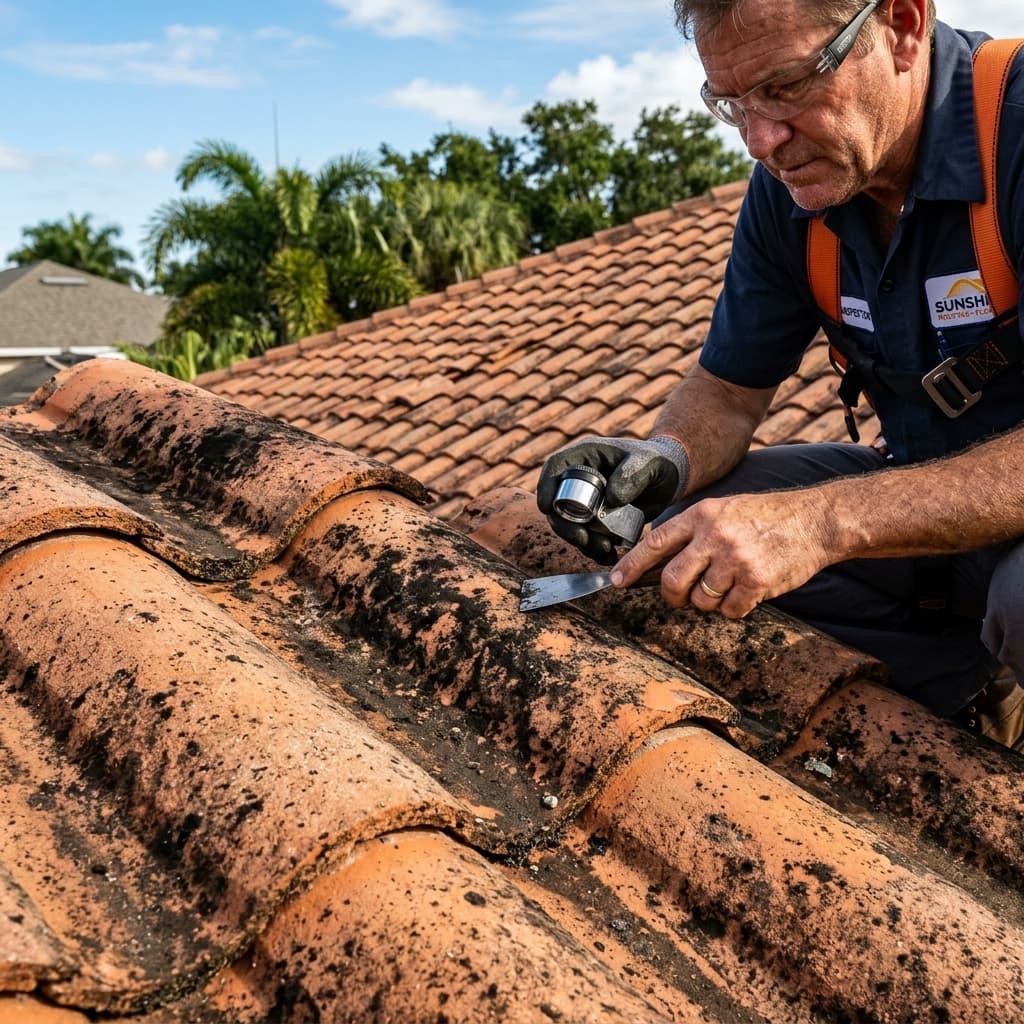
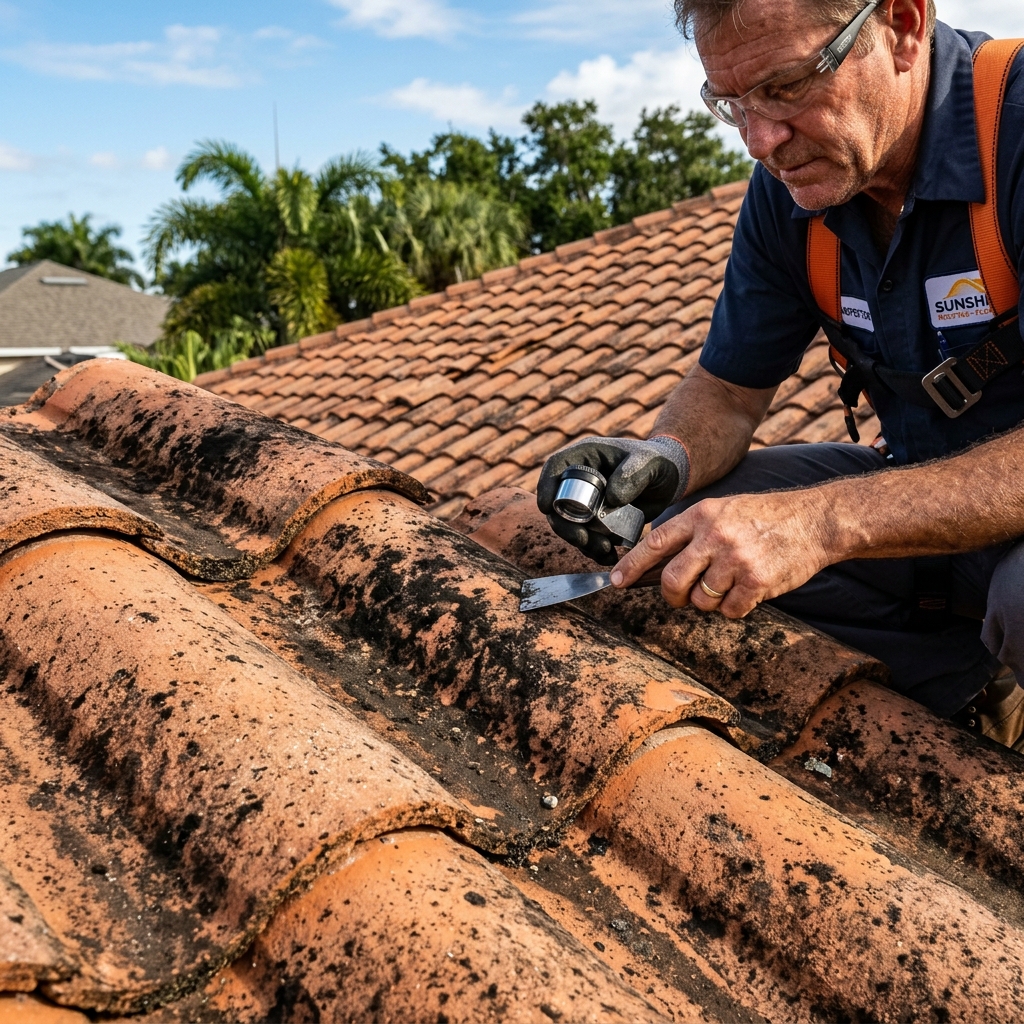
Those ugly black streaks running down your roof are not dirt. They are living colonies of Gloeocapsa magma, a vicious type of blue-green algae. Airborne spores land on your roof. Once they find a damp, shaded environment, they multiply rapidly.
Why Winter Accelerates Growth
During the summer, the brutal heat of the Florida sun bakes the roof dry right after a rainstorm. That suppresses algae growth. In the winter, the sun sits lower in the sky. The north-facing slopes of your roof might not see direct sunlight for months. Morning dew sits on the tiles for hours.
The Damage It Causes
Roof algae is a serious problem. It does more than just ruin your home's curb appeal. It actively destroys your roof.
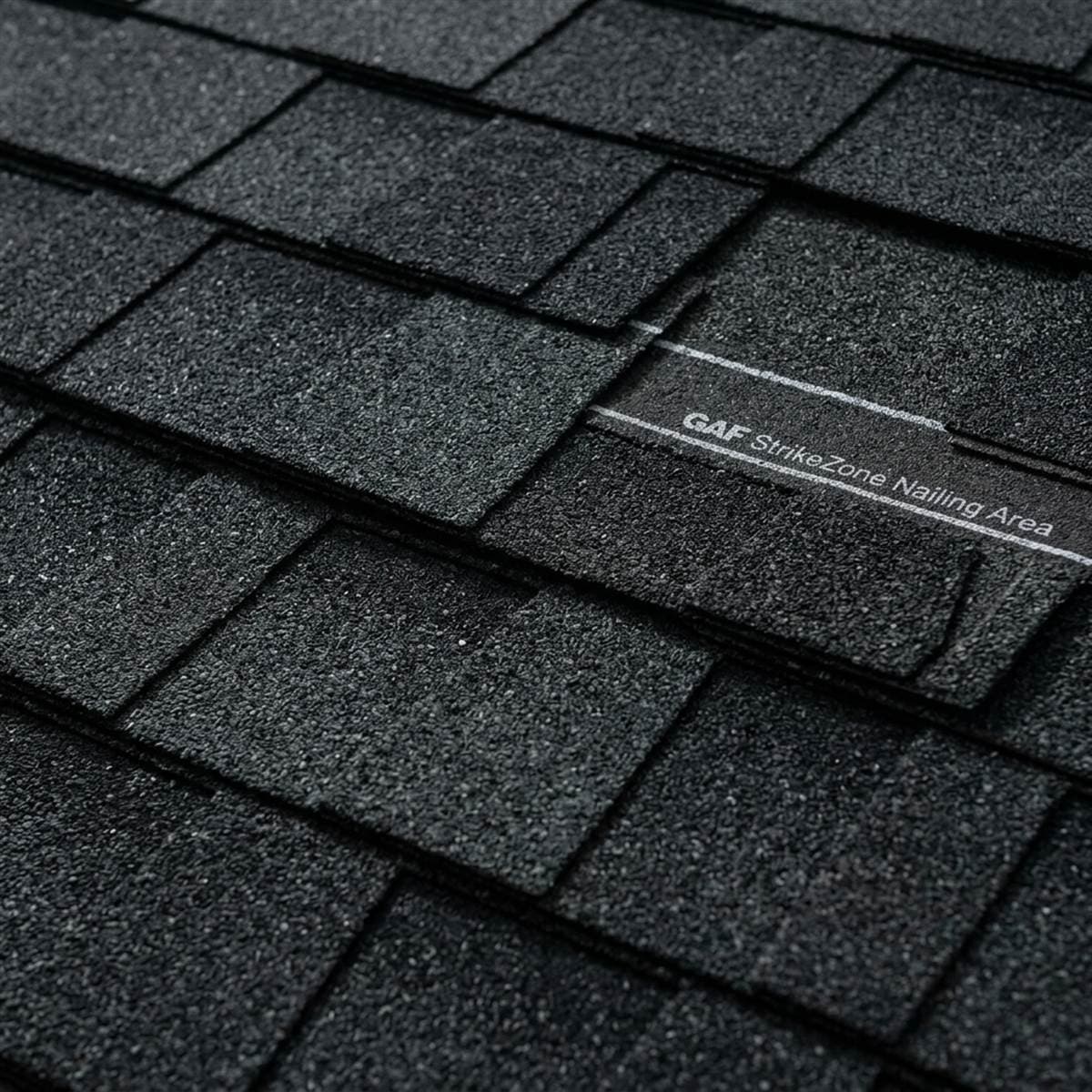
- On Asphalt Shingles: Algae literally eats the limestone filler used to manufacture asphalt shingles. The shingles lose their protective granules. They lose their ability to reflect UV rays. Their lifespan drops dramatically.
- On Tile Roofs: Algae and moss grow root-like structures. They lift the edges of clay and concrete tiles. This organic growth acts like a sponge, holding moisture directly against the roof surface. Water eventually penetrates the underlayment, rotting the wood deck.
Winter Preventative Maintenance
Protecting your roof during the winter months requires a proactive attack:
- Trim Overhanging Branches: Trees provide deep shade. Shade encourages mold growth. Dropping leaves create a damp, rotting mat on the roof. Trim back branches hanging over the roofline. Let maximum sunlight hit those shingles.
- Clear Debris from Valleys: Pine needles and oak leaves stack up in roof valleys. Remove them immediately. Water must flow freely into the gutters instead of pooling on the roof deck.
- Professional Soft Washing: Never blast a high-pressure power washer on your roof. You will strip the granules off shingles and shatter tiles. Hire a professional. Perform a "soft wash"—a low-pressure application of eco-friendly algaecides. It kills the spores without wrecking the roofing material.
- Zinc or Copper Strips: Want long-term prevention? A certified roofing contractor can install thin strips of zinc or copper near the roof ridge. When it rains, metallic ions wash down the roof. It acts as a continuous, natural algaecide.
Do not let the mild winter weather fool you. Organic growth is quietly destroying your roof right now. Call Diversified Roofing Solutions. Schedule a winter maintenance inspection and keep your roof pristine year-round.