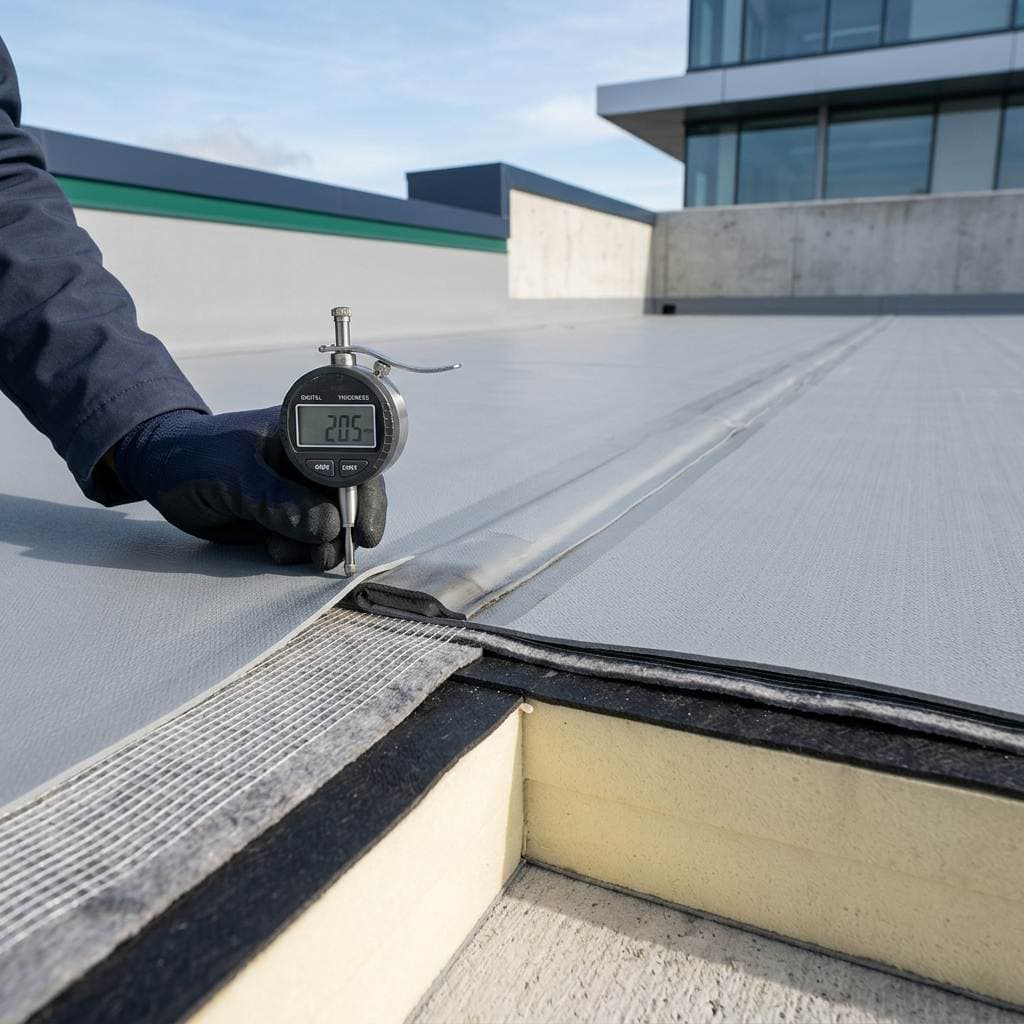
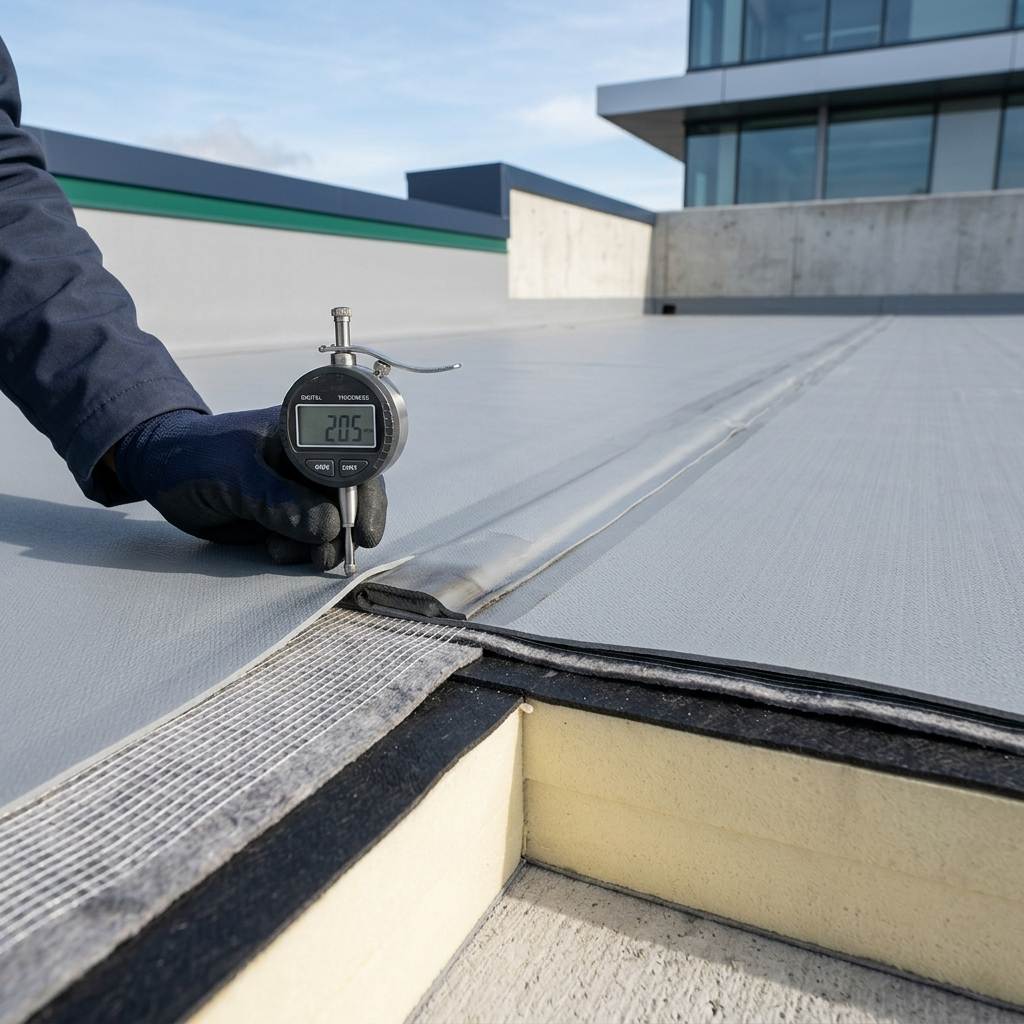
When engineering a commercial flat roof to survive South Florida's brutal storm seasons, picking the correct PVC membrane thickness dictates how long your building stays dry. We measure Thermoplastic Polyvinyl Chloride (PVC) sheets in "mils"—thousandths of an inch. The industry standards are 50 mil, 60 mil, and 80 mil. Selecting an optimized PVC membrane thickness directly locks in your puncture resistance, thermal stability, and windstorm survival rate. If you manage properties in Palm Beach, Broward, or Martin counties, you have to align your PVC membrane thickness with what your facility actually demands. Get it right, and you get decades of leak-free performance.
Comparative Overview of PVC Membrane Thickness Options
Look at the different PVC membrane thickness options, and you quickly see how each sheet layer handles physical abuse and atmospheric stress. Standard membranes stack up in three layers: a top weathering boundary, a tough polyester reinforcement scrim in the middle, and a bottom backing sheet.
Smart building owners who specify elite commercial PVC roofing systems invest heavily in thicker weathering layers. Thicker plastic delivers superior resistance to ultraviolet burning, thermal shock, and the relentless coastal salt fog.
50-Mil PVC Sheets: Entry-Level Utility
A 50-mil PVC membrane thickness is your baseline. It provides entry-level protection suited only for light commercial buildings that see almost zero foot traffic. It's cheap upfront. But the thin profile means a much thinner top weathering layer. That translates directly to a shorter service life. You have to ask yourself: can a 50-mil PVC membrane thickness really survive twenty years of Florida hurricane seasons? Usually, no.
- Puncture Resistance: Weak. Very vulnerable to sharp storm debris or a dropped tool.
- UV Protection: Fair. The thin wearing layer burns off fast under intense South Florida UV rays.
- Average Lifespan: 15 to 20 years, and that assumes perfect maintenance and flawless drainage.
Why 60-Mil and 80-Mil PVC Provide Superior Storm Protection
Stepping up your PVC membrane thickness to 60-mil or 80-mil options drastically ramps up puncture resistance. Your welded seam strength skyrockets. Thicker plastic absorbs the kinetic punch from hail and wind-driven tree branches infinitely better than thin baseline sheets. In our high-wind zones, deploying a heavier PVC membrane thickness ensures the membrane won't tear away from the fastener plates when a Category 4 hits.
- Impact Cushioning: Deep polymer layers swallow the kinetic energy of hail and flying debris.
- Fastener Pull-Through Resistance: Thicker scrim reinforcement laughs at wind suction forces trying to rip the sheet off the deck.
- Weld Thickness: Delivers vastly more thermoplastic material during hot-air welding. The seams fuse into an unbreakable, hermetic seal.
80-Mil PVC: Heavy-Duty Industrial Standard
Got massive rooftop HVAC units? Heavy maintenance foot traffic? You need an 80-mil PVC membrane thickness. Period. This heavy-duty sheet is the industrial standard. It brings maximum durability against dropped wrenches, violent structural shifting, and corrosive chemical exhaust. Look at a 30-year lifecycle. The armor-plated protection of an 80-mil PVC membrane thickness pays for its initial premium ten times over.
Wind Uplift Ratings and Attachment Mechanics
How we tie your roof down depends heavily on your selected PVC membrane thickness and your deck type. Thin sheets demand tight, aggressive mechanical fastening patterns just to stop wind suction from tearing the plastic. Conversely, applying a fully adhered adhesive system to a heavier PVC membrane thickness creates a continuous, unbreakable bond across the entire deck. That maximizes wind uplift resistance.
Life Cycle Cost and Warranty Advantages
Top-tier manufacturers back their heavy materials. They offer longer, non-prorated warranties for systems utilizing a higher PVC membrane thickness. Paying for that thicker profile guarantees your commercial flat roof stays fully covered against accidental punctures and massive wind events.
Thickness Performance Comparison
Let's look at the hard numbers. Here is how these single-ply thicknesses perform in the real world:
| Membrane Profile | Total Thickness (Mils / Inches) | Weathering Layer Thickness | Puncture Resistance (FT-LB) | Manufacturer Warranty (Years) |
|---|---|---|---|---|
| 50-Mil PVC | 50 Mils / 0.050" | ~22 Mils | 25 ft-lbs | 15-Year Standard |
| 60-Mil PVC | 60 Mils / 0.060" | ~28 Mils | 35 ft-lbs | 20-Year System |
| 80-Mil PVC | 80 Mils / 0.080" | ~40 Mils | 50 ft-lbs | 25 to 30-Year Premium |
Conclusion on PVC Membrane Thickness
Choosing your flat roof thickness isn't just a detail. It is a critical engineering decision that dictates your structural safety and capital budget. Sit down with a certified local roofer. Let them analyze your roof load and specify the exact membrane profile your building needs to survive Florida.
Local Service & Contact Signals
Diversified Roofing Solutions provides certified flat roof inspections, maintenance, and installations across South Florida. Contact our Jupiter headquarters for emergency support or a free commercial flat roof assessment.
Diversified Roofing Solutions, Inc.
📍 1829 Park Ln S, Suite 8, Jupiter, FL 33458
📞 (561) 841-5676
✉️ info@diversifiedroofingfl.com
[!TIP] Planning a Roof Replacement? Use our interactive Florida Roof Replacement Cost Calculator to get an instant satellite measurement and pricing estimate for your property.
Local Service Areas & Regional Coverage
Diversified Roofing Solutions provides certified residential and commercial roofing services across South Florida and the Treasure Coast, including Palm Beach County, Martin County, Broward County, and St. Lucie County.