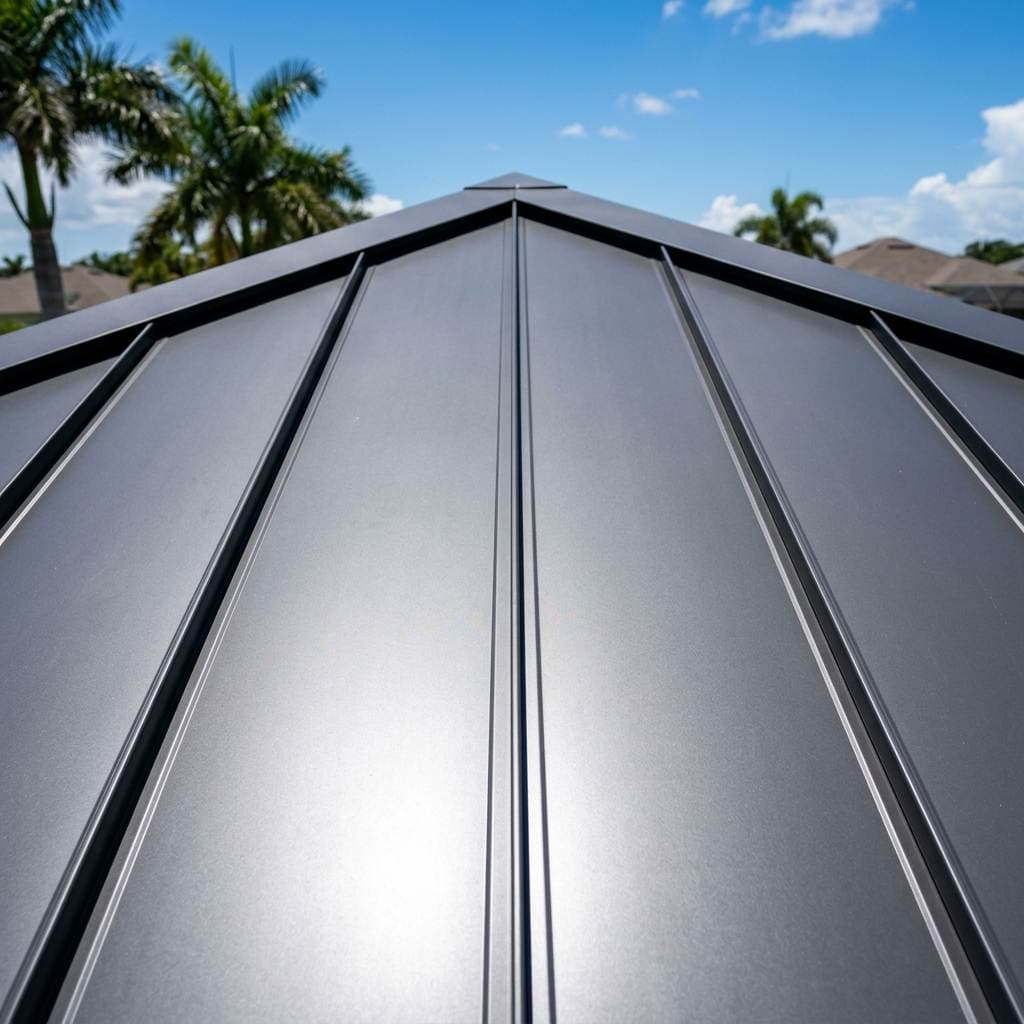
To guarantee your coastal property survives hurricane season, you absolutely must know how to inspect standing seam metal panel fasteners. Traditional screw-down metal roofs expose their screws directly to the elements, guaranteeing rust and leaks. Standing seam designs are superior. They hide their clips and fasteners beneath the metal surface. That protection is a massive upgrade, but it means you need specialized knowledge to inspect standing seam metal panel fasteners. You have to verify the wind uplift resistance and ensure the thermal expansion gaps are clear.
In South Florida battlegrounds like Jupiter, Palm Beach, and Stuart, roofs face violent demands. Driving salt spray. Category 4 wind shear. Relentless solar heat. You need to aggressively inspect standing seam metal panel fasteners to protect your equity and guarantee the roof meets Florida's ruthless building codes. Learn how to hunt down fastener defects before a panel shifts and tears your roof open.
The Hidden Mechanics: Clips, Cleats, and Fasteners
Before you climb the ladder, understand the engineering beneath the metal. Standing seam systems rely on a series of heavy metal clips screwed directly into the structural plywood decking or purlins. The metal panels then snap or mechanically seam right over these clips, locking them down permanently.
Because the fasteners are concealed, walking the top of the roof won't show you the screws. You need physical pull-checks, thermal scans, and underside attic access to inspect standing seam metal panel fasteners and prove their stability.
- Fixed Clips: Anchor the panels at a single point, stopping the metal from sliding vertically.
- Expansion Clips: Let the metal panels physically slide up and down as they aggressively expand and contract under the brutal Florida sun.
- Deck Screws: Heavy-duty, corrosion-resistant carbon steel or stainless steel screws that bolt the clips directly into the roof deck.
3 Critical Steps to Inspect Standing Seam Metal Panel Fasteners
Execute this hard checklist. Do not let hidden defects compromise your wind rating. Add these steps to your annual maintenance audit immediately:
1. Check for Panel Bowing and Thermal Buckling
If expansion clips freeze up, or if an installer stupidly used fixed clips where expansion clips were required, the metal panels are trapped. As the sun heats the roof, the metal expands but cannot move. The panels violently buckle or "oil-can." When you inspect standing seam metal panel fasteners, look straight down the flat areas of the panels during the hottest part of the afternoon. If you see waves, the clips have failed.
2. Inspect Eave and Ridge Anchor Points
The main body of the panel floats on expansion clips, but the eaves (bottom edges) and ridges (top peaks) must be bolted down tight. Check the exposed rivets, aggressive butyl sealants, and locking cleats. Are they locked in? Loose perimeter fasteners are the number one reason roofs peel open during high-wind storms.
3. Verify Galvanic Corrosion and Salt Wear
Coastal environments destroy cheap hardware. If an installer mixes dissimilar metals—like driving carbon steel screws into aluminum panels—rapid galvanic corrosion eats the fasteners alive. Ensure every single clip fastener is coated steel or marine-grade stainless. Climb into the attic and look for orange rust stains bleeding through the decking along the clip lines.
Interlinking Your Roofing Strategy
Maintaining a metal roof is just the first step in defending your property's value. If you are budgeting for a massive update, see how these systems stack up financially by reviewing our metal roof vs shingles cost comparison. These systems also deliver serious thermal efficiency, slashing your cooling bills. See the data in our guide to standing seam metal roofing energy savings.
For new projects, only hire certified specialists who rigidly follow HVHZ installation guidelines. Review our premium standing seam metal roofing installation services to request a hard inspection or schedule a consult.
[!TIP] Planning a Roof Replacement? Use our interactive Florida Roof Replacement Cost Calculator to get an instant satellite measurement and pricing estimate for your property.
Local Service Areas & Regional Coverage
Diversified Roofing Solutions provides certified residential and commercial roofing services across South Florida and the Treasure Coast, including Palm Beach County, Martin County, Broward County, and St. Lucie County.
The Mechanics of Thermal Movement in Standing Seam Roofs
Most roofers misunderstand the raw physics of standing seam metal roofing. The metal has to move. Under the intense South Florida sun, a single metal roof panel can physically expand by a fraction of an inch during the day and violently contract at night. The concealed fastener system is highly engineered to absorb this kinetic energy without shattering the roof's structural integrity or breaking the watertight seal.
Fixed vs. Floating Clip Systems
The secret to survival is the specialized clip system anchoring the panels to the deck. Exposed fastener roofs drive screws directly through the metal, creating rigid, weak pin-points that tear. Standing seam roofs use a hybrid of fixed and floating clips.
- Fixed Clips: Bolted at the ridge or eave to pin the panel in a stationary position, forcing all thermal expansion to travel in one specific direction.
- Floating Clips: Installed down the length of the panel. These clips feature a mechanical sliding base. The metal panel physically glides back and forth over the fastener as it expands and contracts. This stops buckling and warping dead.
Preventing Oil Canning and Panel Fatigue
If a standing seam roof is installed by an amateur—using fixed clips everywhere, or overtightening the screws until the floating clips bind—the thermal energy is trapped. The result is "oil canning," an ugly waviness or buckling across the flat metal panels. Leave it alone, and restricted thermal movement causes severe metal fatigue. Micro-fractures form around the seams. Clips snap. Water pours in. Routine inspections by certified professionals focus on ensuring these floating clip mechanisms stay free of debris and operate smoothly, guaranteeing the long-term survival of your metal roof.