When fortifying your property against extreme coastal storms, understanding how a standing seam metal roof handles brutal wind uplift pressure is mandatory. This is about preventing catastrophic structural failure. This advanced roofing system uses concealed fasteners and interlocking vertical ribs to forge a continuous, weather-tight armor. By totally eliminating exposed screws, a standing seam metal roof kills the leak paths and structural weaknesses that plague traditional screw-down metal panels. In hurricane battlegrounds like Palm Beach, Broward, and Martin counties, engineering a custom standing seam metal roof is the only way to guarantee your building survives high-velocity wind events.
Engineering Secrets of a Standing Seam Metal Roof in High Winds
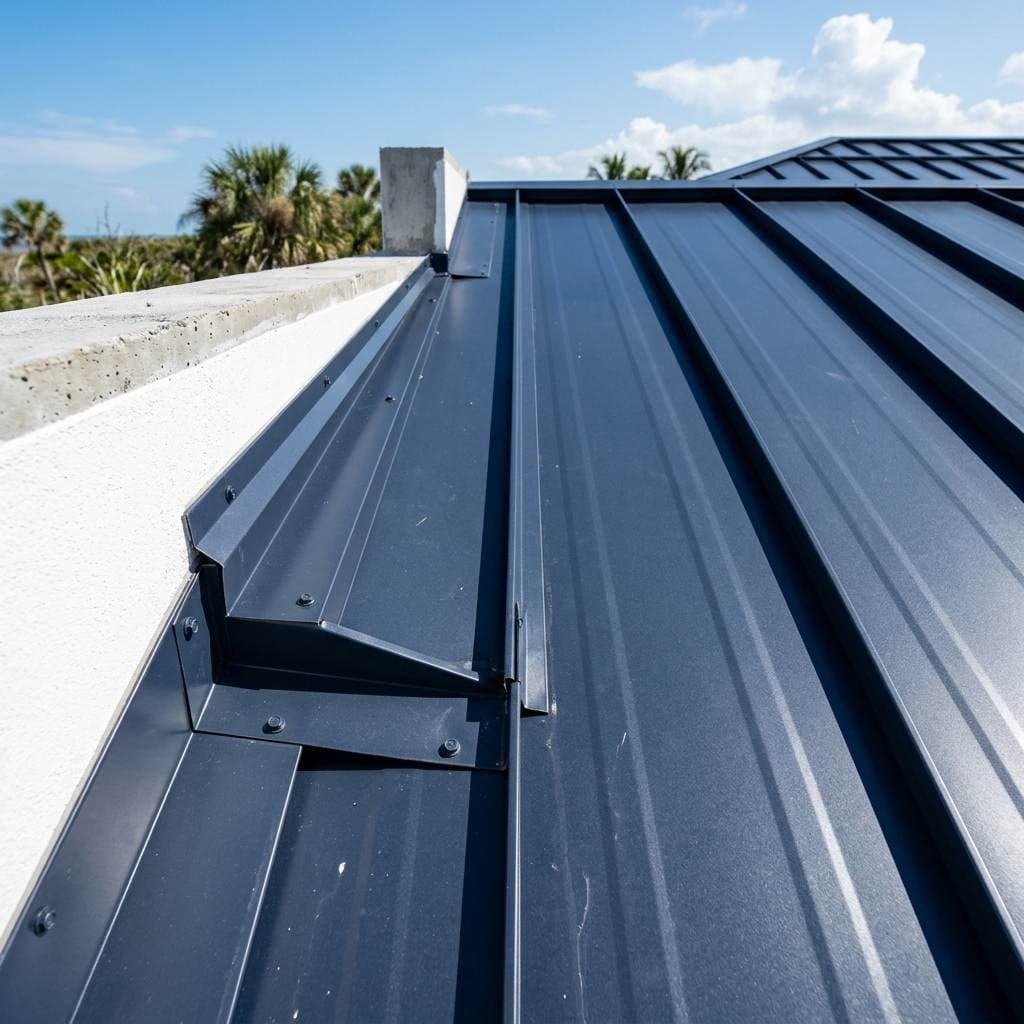
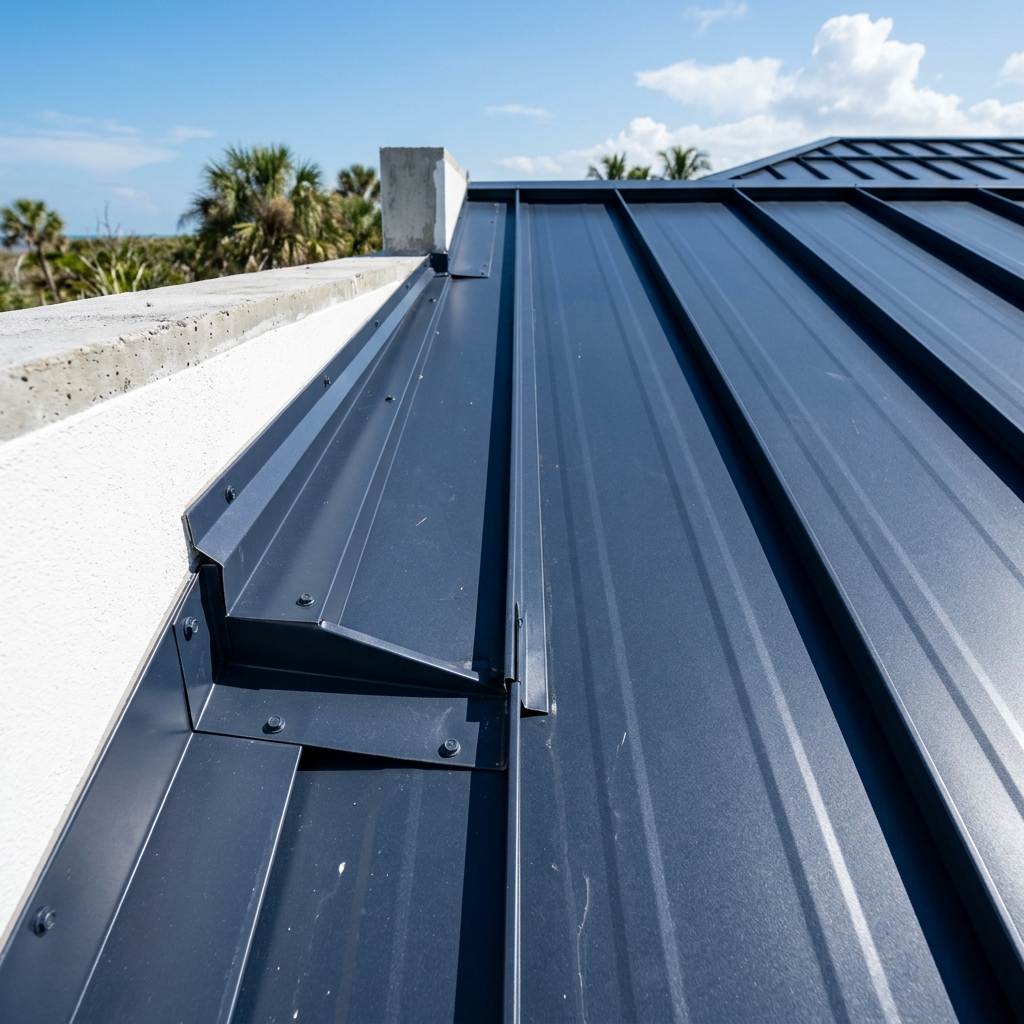
The dominant performance of a standing seam metal roof comes down to its mechanical fastening design. It absorbs kinetic energy. Instead of driving screws straight through the panel, installers bolt the system down using heavy-duty clips anchored directly into the roof deck. These clips allow the panels to flex and slide under intense wind-uplift loads without shattering.
Property owners who invest in premium standing seam metal roofing services secure an engineered barrier. It transfers violent wind forces safely to the building's structural framework. It survives the storm.
Thermal Movement and Panel Clip Stress
Concealed floating clips let the panels slide during thermal expansion without tearing the metal or backing out fasteners. In a true standing seam metal roof, this floating clip mechanism kills structural fatigue at the attachment points. By removing stress on the clip joints, the raw strength of the standing seam metal roof stays 100% intact when a Category 4 wind hits.
- Fixed Clips: Bolted at the ridge point to lock panels in place while letting the rest of the sheet move.
- Expansion Clips: Deliver up to 2 inches of panel travel, completely stopping buckling under the hot coastal sun.
- Seam Mechanical Lock: Panels are mechanically seamed together at 90 or 180 degrees. Wind cannot enter.
Wind Uplift Ratings and Florida Building Code Compliance
Strict structural engineering testing pushes a standing seam metal roof to its absolute limits. Under brutal UL 580 and ASTM wind tests, a heavy-gauge standing seam metal roof hits class-90 uplift resistance. That means it takes wind speeds exceeding 150 mph. Adhering to these strict building codes is non-negotiable for coastal installations in Stuart, Jupiter, and Fort Lauderdale.
- UL 580 Test: Violently evaluates the resistance of the roof assembly against constant and oscillating uplift pressures.
- TAS 125 Compliance: The mandatory standard test protocol required for building certifications in high-velocity hurricane zones (HVHZ).
- ASTM E1592: Measures the uniform static air pressure difference to test wide-span metal panel systems.
Fastener Spacing and Deck Attachment Specs
The spacing of your attachment clips decides whether a standing seam metal roof stays anchored or ends up in your neighbor's yard. In the roof's corner zones—where wind suction forces rip the hardest—engineers mandate extremely tight clip spacing. Securing the deck with ring-shank nails or heavy structural screws ensures the standing seam metal roof transfers the violent load directly into the structural frame.
Comparing Systems: Standing Seam Metal Roof vs. Shingles
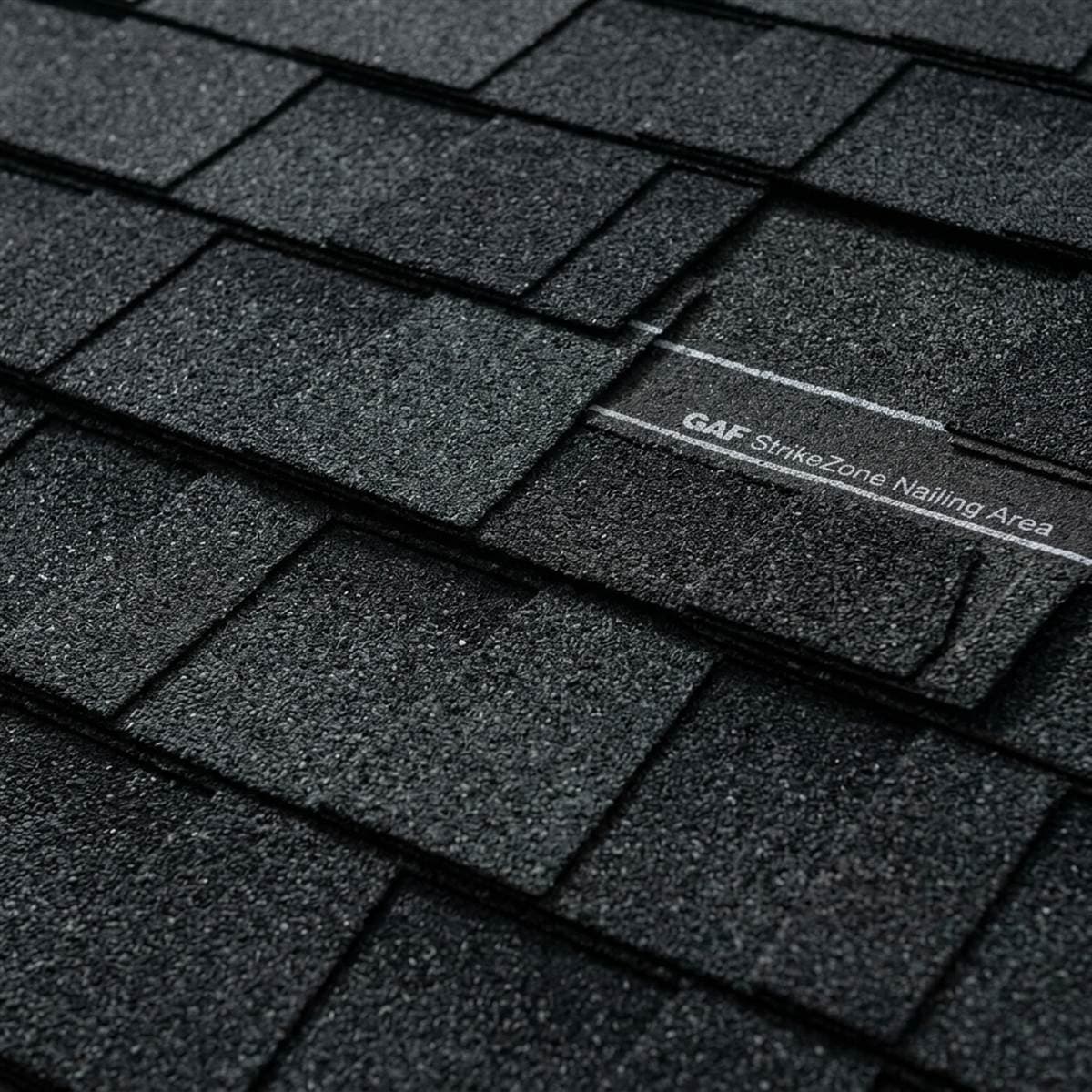
When you compare wind durability, a standing seam metal roof destroys asphalt shingles. Shingles rely on cheap adhesive strips that dry out in the Florida sun. Once the glue fails, the wind peels them off card by card. The interlocking joints of a standing seam metal roof offer zero leverage. The wind cannot get underneath. The roof does not peel.
Insurance Premium Discounts and Long-Term Value
Homeowners who upgrade to a certified standing seam metal roof trigger massive wind mitigation discounts on their property insurance. By documenting the structural integrity of your standing seam metal roof, you slash your premium rates while securing an architectural asset that outlasts the building.
Wind Durability & Material Rating Matrix
The table below breaks down the hard engineering performance differences between architectural standing seam systems and outdated legacy roofs:
| Roofing System | Wind Uplift Resistance | Fastener Type | Expansion Capacity | Insurance Savings |
|---|---|---|---|---|
| Standing Seam Metal | Class 90 (Up to 160 MPH+) | Concealed Floating Clips | Excellent (Slides on clips) | Maximum (Up to 35%) |
| Screw-Down Metal | Class 60 (Up to 120 MPH) | Exposed Gasket Screws | Poor (Screws restrict movement) | Moderate |
| 3-Tab Asphalt Shingles | Class 30 (Up to 90 MPH) | Exposed Nails & Tar strip | None | Baseline (None) |
| Concrete Barrel Tiles | Class 75 (Up to 140 MPH) | Adhesive Foam / Screws | None | High |
Conclusion on Standing Seam Metal Roof Systems
Investing in high-end structural metal is the absolute best way to armor South Florida homes and businesses from catastrophic hurricane wind forces. Partner with a certified local specialist. Guarantee your asset meets all high-velocity structural wind requirements.
Local Service & Contact Signals
Diversified Roofing Solutions executes certified flat and sloped roof inspections, maintenance, and structural installations across South Florida. Contact our Jupiter headquarters for emergency support or a free sloped roof assessment.
Diversified Roofing Solutions, Inc.
📍 1829 Park Ln S, Suite 8, Jupiter, FL 33458
📞 (561) 841-5676
✉️ info@diversifiedroofingfl.com
Local Service Areas & Regional Coverage
Diversified Roofing Solutions provides certified residential and commercial roofing services across South Florida and the Treasure Coast, including Palm Beach County, Martin County, Broward County, and St. Lucie County.