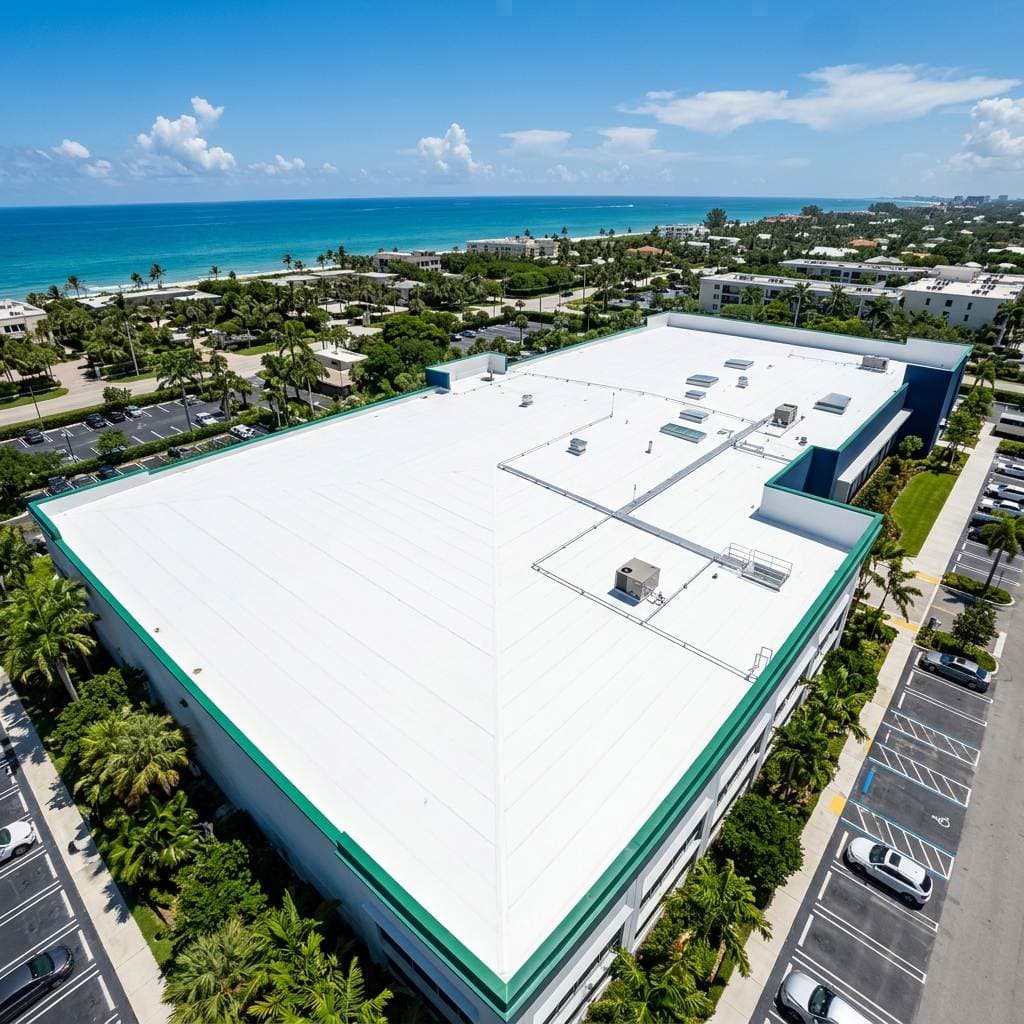
Managing commercial assets means you need hard numbers. Grasping the true TPO roof lifespan in South Florida's brutal climate dictates your long-term capital budget. When our crews roll out a heavy-duty single-ply Thermoplastic Polyolefin (TPO) roof, it stands up to Palm Beach, Broward, and Martin counties for 15 to 25 years. But that TPO roof lifespan isn't guaranteed. It swings hard based on membrane thickness, relentless UV weathering, thermal cycling, and strict wind storm mitigation practices. You want to maximize the TPO roof lifespan of your building? You need aggressive inspections and perfect drainage design.
Factors Influencing TPO Roof Lifespan in Florida
The local Florida climate sets the absolute physical limits of your TPO roof lifespan. We deal with severe heat, heavy atmospheric salinity, and violent tropical rainstorms. Standard single-ply systems take a beating from relentless solar radiation, which bakes and degrades the polymer matrix.
To protect your commercial asset, you must consult with veteran specialists. We install heavy-duty commercial TPO roof systems specifically engineered to take on these extreme tropical elements.
Membrane Thickness and Its Role in TPO Roof Lifespan
Dialing in the correct membrane thickness directly dictates the long-term TPO roof lifespan of your commercial building. Thicker membranes, like 60-mil or 80-mil rolls, deliver massive puncture resistance. They give you a thicker wear layer to absorb decades of severe weathering. When property owners invest in premium thickness, they extend their TPO roof lifespan by years.
- 45-Mil Membranes: The budget play. Expect a shorter service window of 12-15 years.
- 60-Mil Membranes: The commercial industry standard. It hits the sweet spot between hard costs and real durability.
- 80-Mil Membranes: The heavy-duty option. It delivers maximum resistance to dropped tools, foot traffic, and flying storm debris.
Wind Storm Mitigation and TPO Roof Lifespan
Building in the High-Velocity Hurricane Zone (HVHZ) means we don't mess around with fastening patterns. We lock down the TPO roof lifespan against severe pressure differentials. In counties like Palm Beach and Broward, Category 4 wind uplift will rip an unsecured membrane clean off the deck. We strictly enforce Florida Building Code requirements to keep the installation anchored, preserving your TPO roof lifespan when the next major storm hits.
Maintenance Protocols to Maximize TPO Roof Lifespan
Running a strict semi-annual inspection routine is the cheapest insurance policy to preserve your TPO roof lifespan. Clogged scuppers, standing water ponds, and heavy structural movement rip seams apart and accelerate membrane failure. We hunt down and kill minor issues early. That protects the building and guarantees a maximum TPO roof lifespan.
- Inspect Welded Seams: We probe for splits or cold welds that let water bleed into your expensive insulation.
- Clear Roof Drainage: We rip dirt and palm fronds out of scuppers, gutters, and internal drains.
- Evaluate Flashing Details: We check every pipe boot and parapet wall where building movement tears seals apart.
Restoration Coatings and Extending TPO Roof Lifespan
Don't wait until the roof fails entirely. Before a system flatlines, we roll out a heavy silicone coating to renew the TPO roof lifespan without an expensive, disruptive tear-off. These liquid-applied membranes aggressively seal your seams and restore blinding UV reflectivity. This move adds 10 to 15 years to the TPO roof lifespan. We strongly recommend this restoration tactic for building owners in Martin and Broward counties looking to squeeze maximum ROI from their assets.
Comparing Materials: TPO Roof Lifespan vs. Other Flat Systems
Stacking up flat roofing systems? The TPO roof lifespan delivers the absolute best balance between upfront capital and long-term durability. EPDM might offer comparable time, but TPO's blinding white surface kills thermal cycling and protects the structure underneath. A standard TPO roof lifespan crushes basic felt systems and easily goes toe-to-toe with heavy built-up asphalt designs.
| Roofing System | Average Lifespan (Years) | Puncture Resistance | Solar Reflectivity (Cool Roof) |
|---|---|---|---|
| TPO Single-Ply | 15 - 25 Years | Moderate to High | Excellent (Up to 80%) |
| PVC Single-Ply | 20 - 30 Years | High (Chemical Resistant) | Excellent (Up to 82%) |
| Modified Bitumen | 15 - 20 Years | Very High | Poor (Unless Coated) |
| Built-Up Roof (BUR) | 20 - 30 Years | High (Multi-Ply) | Poor (Unless Gravel/Coated) |
Conclusion on TPO Roof Lifespan
Locking in a massive TPO roof lifespan takes three things: premium thick materials, veteran installation, and aggressive proactive maintenance. Call Diversified Roofing Solutions. Our certified commercial crews ensure your building stays bone-dry against Florida's harshest weather.
Local Service & Contact Signals
Diversified Roofing Solutions provides certified flat roof inspections, maintenance, and installations across South Florida. Contact our Jupiter headquarters for emergency support or a free commercial roof assessment.
Diversified Roofing Solutions, Inc.
📍 1829 Park Ln S, Suite 8, Jupiter, FL 33458
📞 (561) 841-5676
✉️ info@diversifiedroofingfl.com
[!TIP] Planning a Roof Replacement? Use our interactive Florida Roof Replacement Cost Calculator to get an instant satellite measurement and pricing estimate for your property.
Local Service Areas & Regional Coverage
Diversified Roofing Solutions provides certified residential and commercial roofing services across South Florida and the Treasure Coast, including Palm Beach County, Martin County, Broward County, and St. Lucie County.