Residential Roofing Specialties
Durable, energy-efficient home roofing systems engineered to withstand South Florida's coastal climates and storms.
When exploring various **residential roofing types** in South Florida, homeowners must consider wind resistance, local building permit requirements, and HOA design guidelines. Selecting from these **residential roofing types** requires understanding how materials react to high humidity, UV exposure, and salt spray corrosion. At Diversified Roofing Solutions, we help you evaluate which systems deliver the best long-term security.
What Are the Most Durable Residential Roofing Types in Florida?
The most durable **residential roofing types** in South Florida are concrete tile, standing seam metal, and natural slate. These materials provide class-leading wind resistance up to 180+ MPH and high UV reflectivity, making them ideal for protecting local coastal properties during major storm events.
Selecting the right system involves assessing structural weights, local wind speed zones, and marine corrosion hazards. Homeowners living near waterfronts require rust-proof materials like aluminum or clay tiles, whereas inland properties can choose cost-effective standing seam steel or architectural dimensional shingles.
Algae-Resistant Architectural Shingles
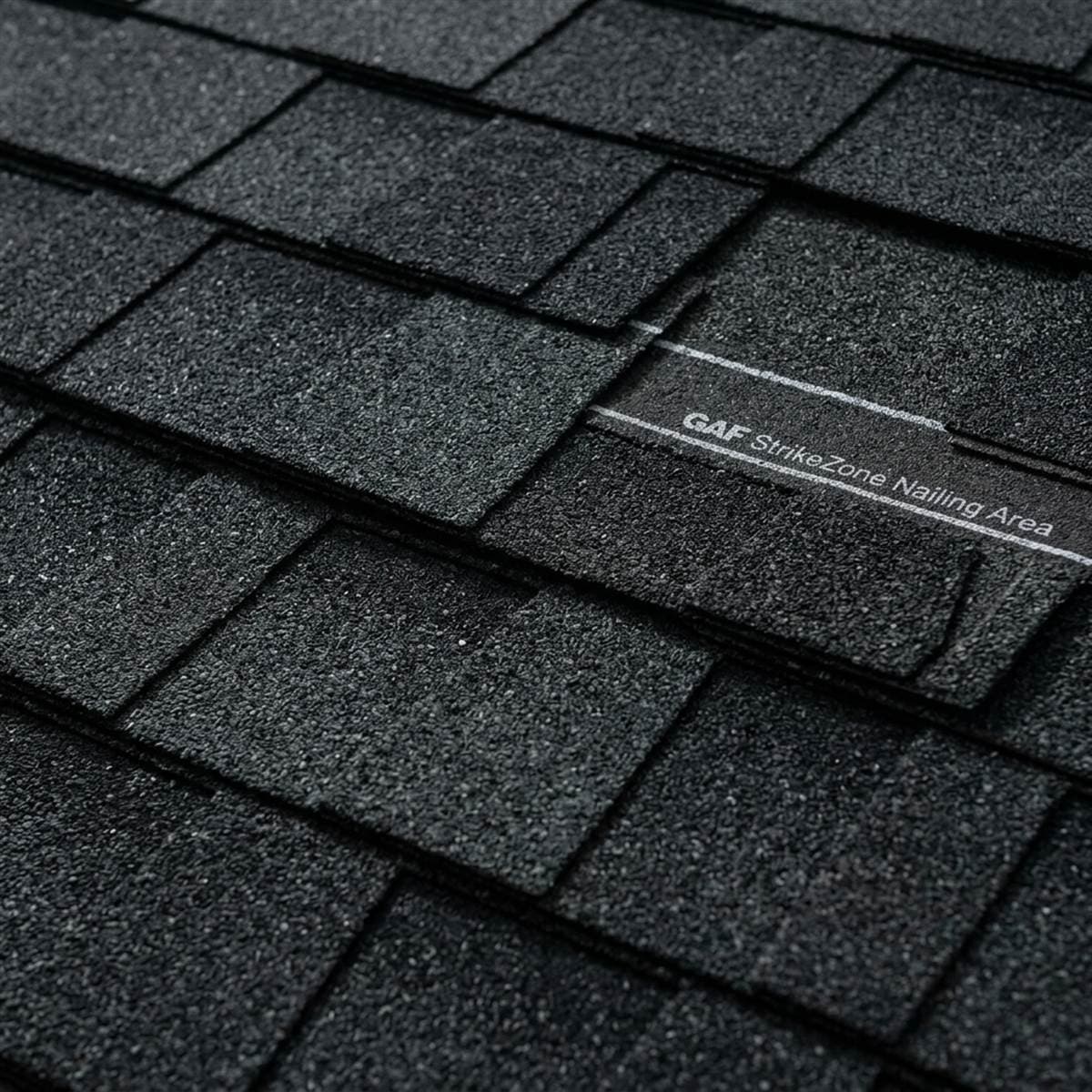
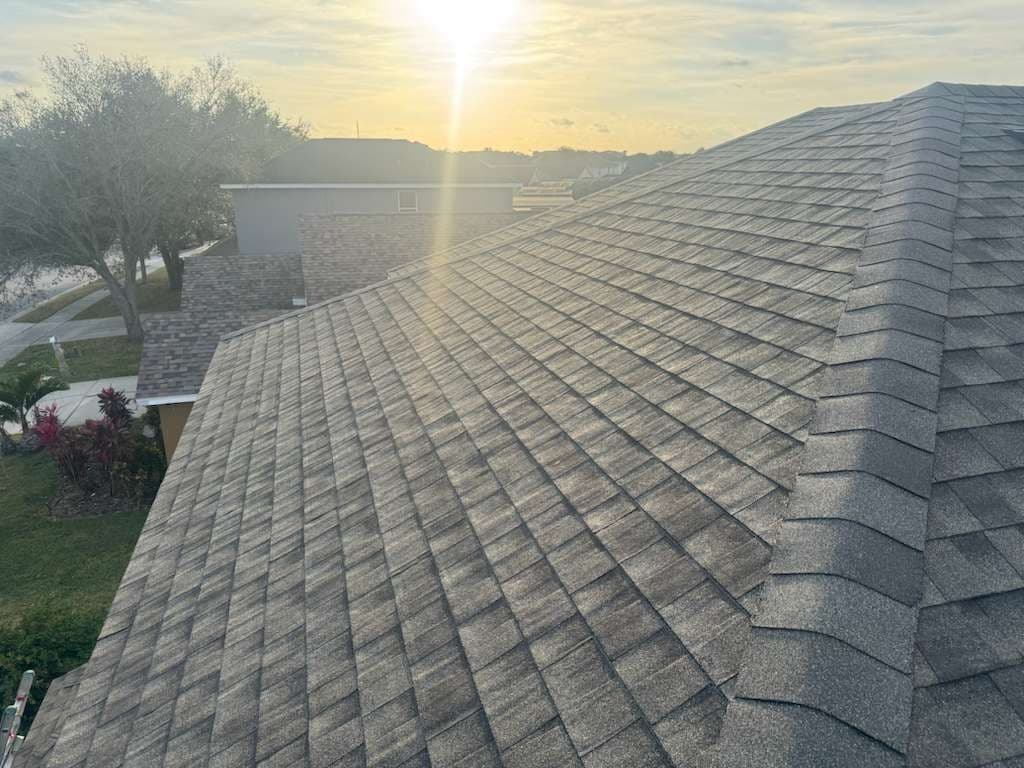
Asphalt shingles remain the most popular of all residential roofing types because they offer a cost-effective, versatile, and highly wind-resistant solution for modern homes. We install premium laminated dimensional shingles that feature a multi-layer design to mimic natural wood shakes while providing high structural defense. Homeowners reviewing standard residential roofing types will find that architectural shingles represent an exceptional balance of upfront value and reliable storm performance.
Unlike standard 3-tab shingle systems, dimensional shingles are rated for wind speeds up to 130 MPH. Our crew has installed different residential roofing types since 2001, ensuring that every shingle system is fastened with six ring-shank nails and reinforced with self-adhering secondary water barriers. This guarantees that your shingle system remains leak-free under severe coastal rain storms.
Concealed Fastener Standing Seam Metal
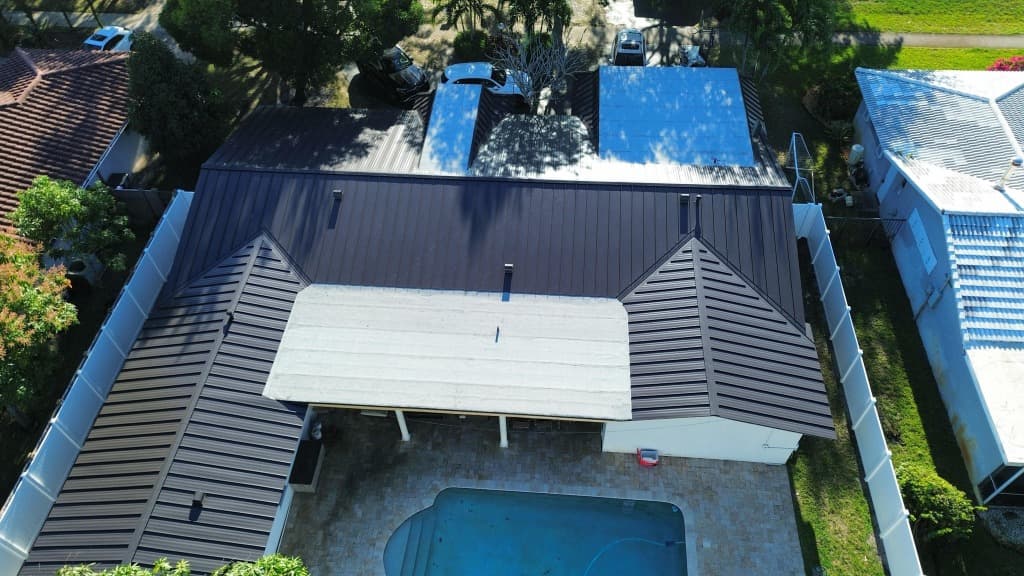
Metal stands out among modern residential roofing types due to its exceptional lifespan, high solar reflectivity, and structural wind resistance. We specialize in roll-forming standing seam metal roofs on-site, using concealed fastener clips that eliminate exposed screws. When comparing metal to other residential roofing types, check the thickness and fastening method, as standing seam systems offer the highest protection against wind uplift forces up to 180+ MPH.
In South Florida's hot summers, standing seam metal is one of the best choices to reduce cooling costs. The reflective Kynar 500 paint finishes bounce solar radiant heat away from your attic, reducing energy loads by up to 25%. We specialize in premium residential roofing types that withstand the harshest elements, ensuring that your metal installation is fully code-compliant.
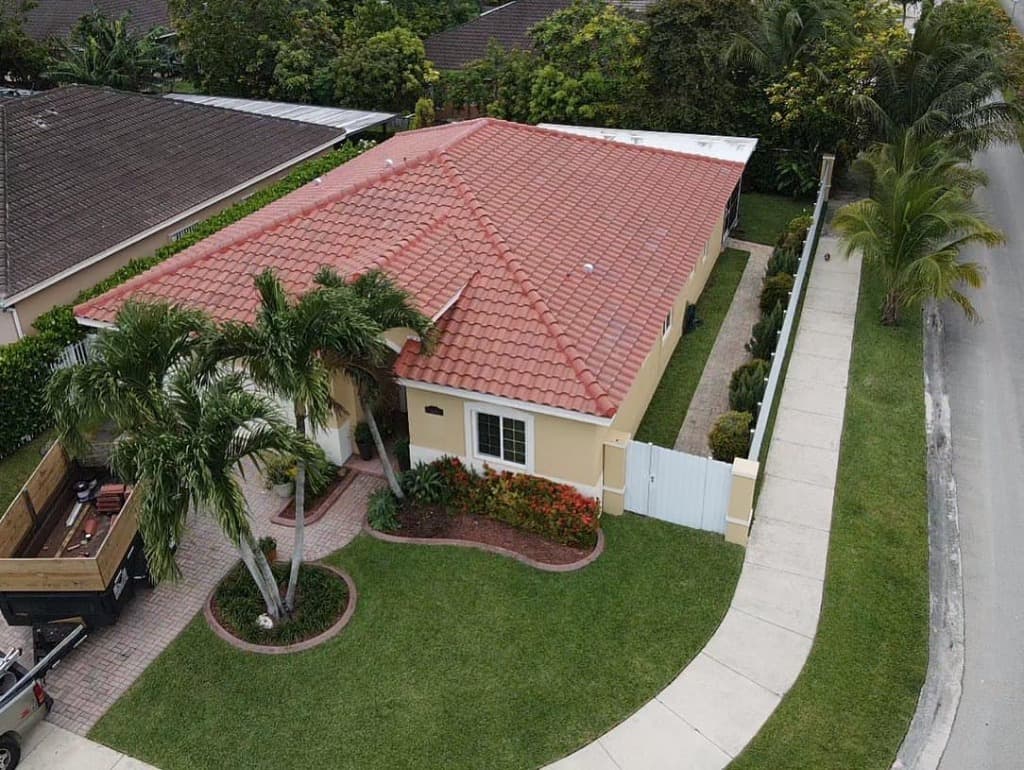
Hurricane-Rated Concrete & Clay Tiles
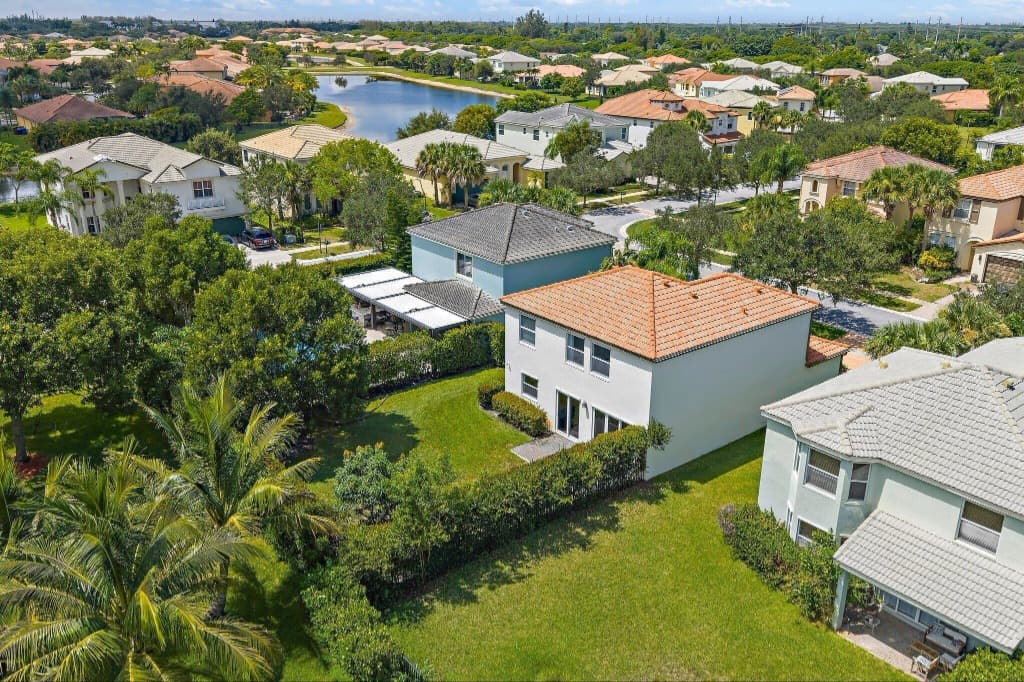
Clay and concrete are the heavyweights among residential roofing types, providing the classic Mediterranean look that defines South Florida neighborhoods. These interlocking tile systems are highly durable, fireproof, and provide excellent thermal insulation. Many local HOAs mandate specific residential roofing types like concrete S-tile or flat shake tiles to maintain community design standards and property values.
Because tiles are heavy, they require strong structural framing. Our experience installing these residential roofing types ensures that we complete a full truss inspection and apply high-performance adhesive foam to secure each tile. This advanced installation method prevents tiles from lifting during high-wind storms, outperforming traditional nail fastening.

Sleek Standing Seam Aluminum Panels
Aluminum represents a highly specialized choice of residential roofing types, offering complete immunity to saltwater rust and marine corrosion. For homes located directly on waterfront channels or near coastal beaches, aluminum is the single best metal option available. Unlike other metal residential roofing types, aluminum forms a protective oxide layer that shields it from salt spray degradation.
Aluminum is exceptionally lightweight, weighing only about 50 pounds per square (100 sq ft). This low weight makes it an excellent choice for re-roofing older properties without requiring truss reinforcements. We educate homeowners on the best residential roofing types for their specific coastal micro-climates, and aluminum standing seam is always a top recommendation.
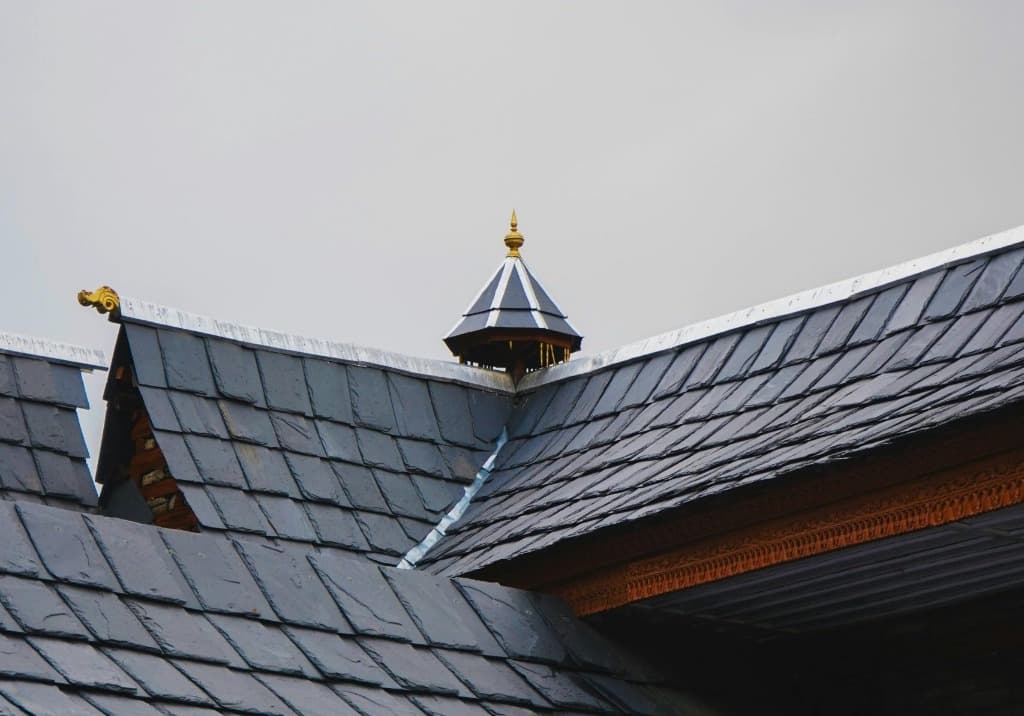
Luxury Natural & Synthetic Slate
Natural slate is the longest-lasting of all residential roofing types, often referred to as the 'hundred-year roof' due to its chemical immunity to moisture, rot, and decay. For homeowners seeking the ultimate architectural statement, natural slate tiles provide deep textures and beautiful color variegations. Installing these historic residential roofing types requires specialized slating tools, hand-fastening copper nails, and expert craftsmanship.
For homes that cannot handle the weight of natural stone, we install high-quality synthetic slate tiles made from engineered polymers. Synthetic slate provides the same chiseled edge textures at a fraction of the weight and cost. Our status as a leading installer of premium residential roofing types is backed by our dedicated slate restoration crews.
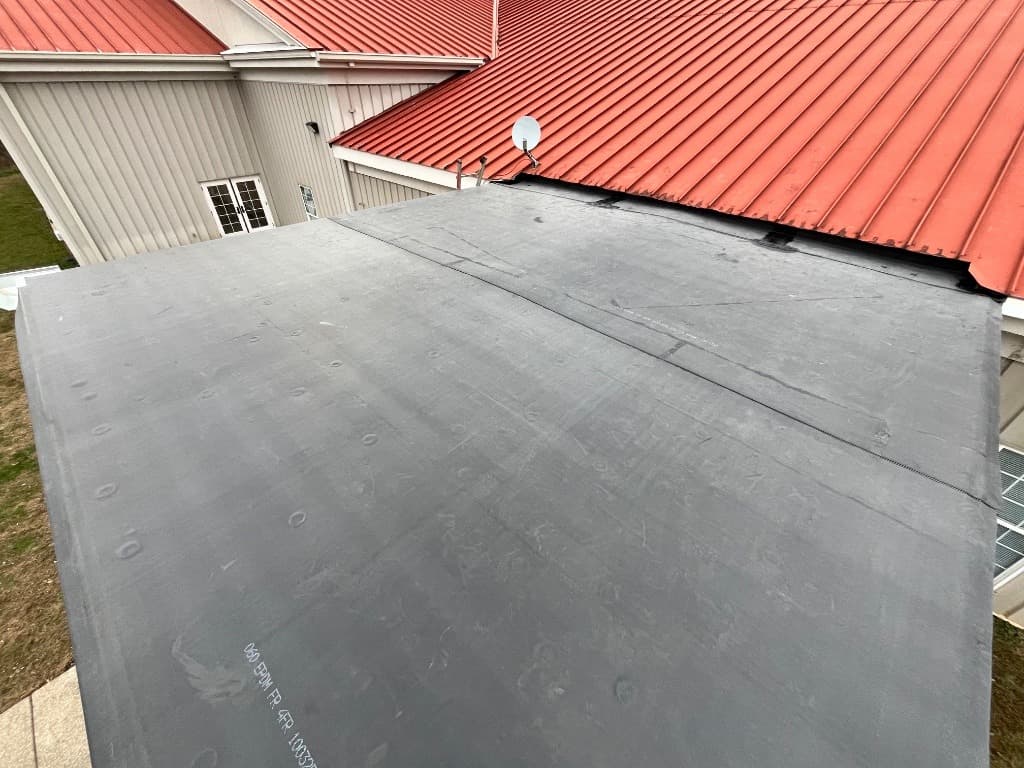
High-Durability Low-Slope EPDM Membranes
Low-slope roofs require different residential roofing types than pitched roofs because water cannot drain as quickly. We install durable EPDM synthetic rubber membranes on flat roof extensions, garages, and commercial decks. When looking at flat residential roofing types, EPDM rubber is highly valued for its ability to handle standing water without degrading or leaking.
EPDM is highly flexible, allowing it to stretch and contract as temperatures shift. We customize all flat residential roofing types with high-performance insulation boards and chemically primed seam tape to guarantee a watertight seal. This ensures long-term leak protection for low-slope sections of your home.
How Do Underlayments and Installation Methods Impact Residential Roofing Types?
Underlayments are the silent protectors of all **residential roofing types**, acting as a secondary water barrier that prevents leaks if the outer shingles or tiles lift. Proper installation methods, such as adhesive foam for tiles or sliding clips for metal, ensure maximum wind resistance.
In South Florida's humid climate, trapping condensation under a metal or tile system leads to wood rot. This is why we use high-temperature self-adhering membranes that remain pliable and seal around fastener penetrations. Choosing between these **residential roofing types** depends heavily on finding a contractor who prioritizes this secondary waterproofing barrier. We install all of these **residential roofing types** with dual-layer deck protection.
How Do Homeowners Select Between Different Residential Roofing Types?
The decision matrix for selecting **residential roofing types** balances aesthetic style, structural load limits, local HOA guidelines, and long-term budget return. Older homes may be limited to lighter shingle or metal options unless structural trusses are reinforced for heavy concrete tiles.
Our company guide on **residential roofing types** helps you navigate these factors during your decision process. We provide physical samples of all **residential roofing types** during our free home consultations, allowing you to compare shingle, metal, and tile options side-by-side to match your neighborhood aesthetic.
What is the Life Cycle Cost of Various Residential Roofing Types?
The upfront cost of different **residential roofing types** varies significantly, with shingles representing the lowest initial investment and natural slate representing the highest. However, evaluating **residential roofing types** on a cost-per-year basis shows that metal, tile, and slate deliver superior long-term ROI.
Our advisors calculate the ROI of all **residential roofing types** by factoring in your home insurance premium savings (via wind mitigation credits) and lower energy bills. Over a 30-year period, a metal or tile system is often cheaper than replacing an asphalt shingle roof twice.
Residential Materials Matrix
| Material Option | Wind Rating Limit | Weight Class | Estimated Lifespan | Salt Spray Resistance |
|---|---|---|---|---|
| Standing Seam Metal | Up to 180+ MPH | Lightweight (~150 lbs) | 45 - 55 Years | High (Galvalume) |
| Concrete / Clay Tile | Up to 180 MPH | Heavyweight (~900 lbs) | 50 - 80+ Years | Highest (No corrosion) |
| Architectural Shingles | Up to 130 MPH | Medium (~240 lbs) | 15 - 20 Years | Medium (Algae guard) |
| Sleek Aluminum | Up to 180+ MPH | Ultra-Light (~50 lbs) | 50 - 70 Years | Highest (Immune to rust) |
| Natural Slate | Up to 150+ MPH | Heavyweight (~1200 lbs) | 100 - 150 Years | Highest (Natural stone) |