South Florida roofing systems take a daily beating. High-speed tropical winds, saltwater corrosion, brutal UV radiation, and torrential rains hammer your shingles, tiles, and flat membranes. Protecting your property value requires proactive maintenance. A professional roofing inspection is the first line of defense. Dealing with storm damage? Prepping for hurricane season? Fighting with your home insurance carrier? A comprehensive assessment by certified local professionals delivers the hard documentation and peace of mind you need.
1. What is a professional roofing inspection?
Need Immediate Assistance?
Speak with a local certified roof specialist and schedule your free, no-obligation inspection today.
A professional roofing inspection is an exhaustive physical and visual teardown of your building's roof structure. Certified inspectors hunt for microscopic damage. We check the condition of shingles, tiles, and metal panels. We probe flashing seals around chimneys and valleys. We test drainage channels. We crawl your attic looking for hidden moisture.
In Florida, this evaluation is non-negotiable. Minor leaks fester behind drywall and insulation for months before they stain your ceiling. Ignore them, and you're buying a new structural deck and paying for toxic mold remediation. Plus, annual inspections are legally required to keep premium manufacturer warranties active.
2. Finding a certified roofing inspection near me
Don't trust a guy with a ladder and a truck. When searching for a certified roofing inspection near me, demand hard proof:
- Florida DBPR Licensing: Verify the contractor holds an active license (like ours, #CCC1330205) on the state portal.
- Physical Local Office: Avoid out-of-state storm chasers who vanish when hurricane season ends. Hire established companies anchored in Palm Beach or Martin County.
- Manufacturer Accreditations: Demand certifications from GAF, Owens Corning, or CertainTeed. It proves the crew has survived rigorous factory training.
3. What does a typical roof inspection cost?
The exact roof inspection cost scales with the size of the structure, the pitch of the roof, and the level of engineering documentation required. Here is the breakdown for Palm Beach and Martin County:
| Inspection Category | Description & Deliverables | Average Cost Range |
|---|---|---|
| Standard Residential | Visual inspection of coverings, flashing review, digital photo report. | $150 - $350 |
| Wind Mitigation | Official OIR-B1-1802 filing to unlock insurance premium discounts. | $150 - $250 |
| Drone Roof Inspection | HD aerial imagery and thermal scans of steep or fragile slopes. | $250 - $500 |
| Commercial Flat Roof | Infrared moisture scans, core sampling, and drainage volume checks. | $500 - $1,500+ |
Paying for a detailed inspection saves you thousands. We catch torn flashing and slipped tiles before they trigger catastrophic interior damage.
4. Residential vs. commercial roof inspection
The core difference between a residential job and a commercial roof inspection comes down to materials and engineering variables. Residential inspections target sloped assemblies—asphalt shingles, heavy concrete tiles, or standing seam metal. We focus on wind-lift resistance, attic airflow, and aesthetic alignment.
A commercial roof inspection tackles flat membranes like TPO, PVC, and EPDM. Commercial inspectors evaluate massive drainage systems, heat-welded seams, and heavy HVAC curbs. We rip core cuts to check the density of the underlying polyiso insulation boards. It's a highly technical structural review.
5. How a drone roof inspection spots hidden damage
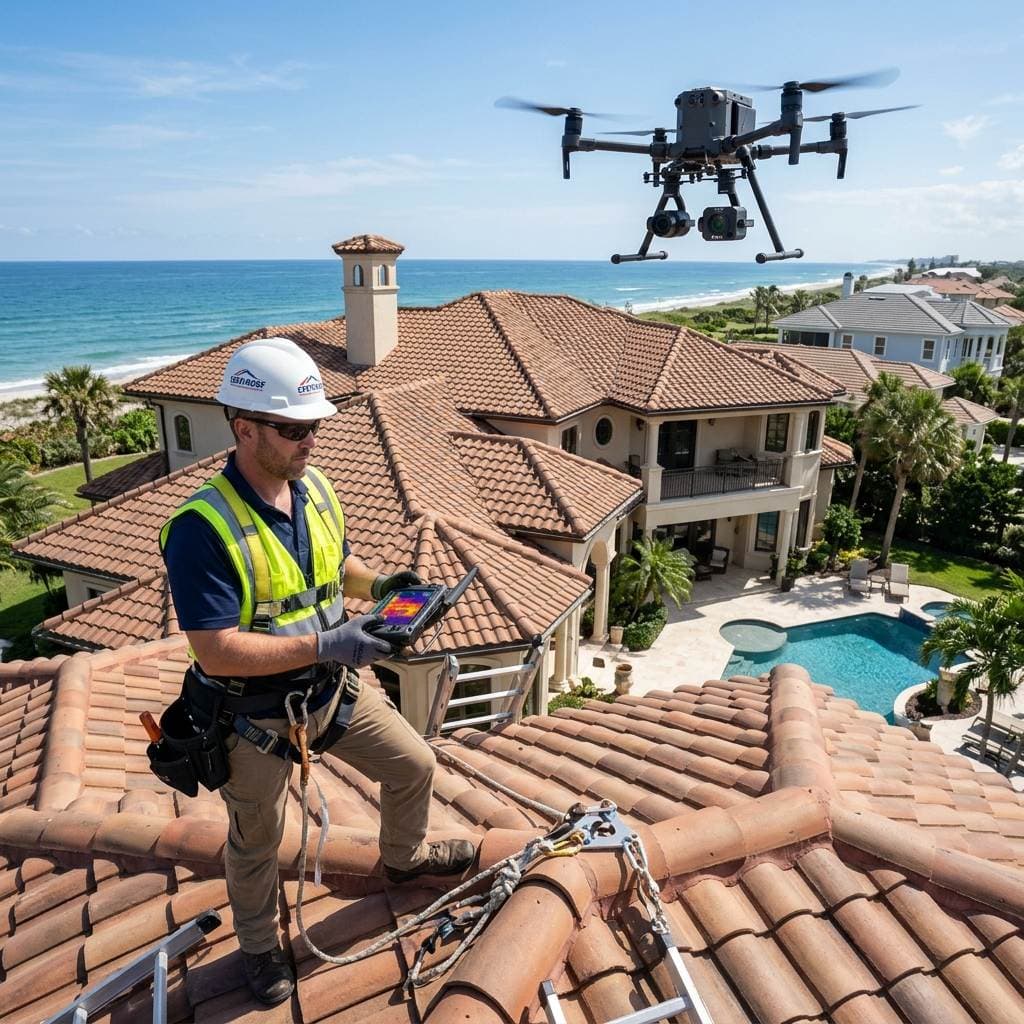
A drone roof inspection deploys high-resolution cameras and infrared thermal sensors to survey your roof from the air. Walking on a high-slope clay tile roof shatters fragile barrels. The drone prevents that damage entirely.
Deploying a roof inspection drone lets us pinpoint backed-out fasteners, shifted shingles, and microscopic thermal anomalies. Thermal cameras dominate on flat low-slope membranes. Because wet insulation holds solar heat longer than dry insulation, the thermal camera lights up hidden water entry spots at night. We execute surgical spot repairs instead of a massive, expensive tear-off.
6. When is a roof inspection for insurance required?
A roof inspection for insurance is standard operating procedure in Florida. Carriers demand this certification constantly:
- Age Thresholds: If your home hits 15 years old, carriers demand proof of remaining lifespan before they renew coverage.
- New Policy Binding: Buying a house? Switching carriers? A 4-Point Inspection is mandatory.
- Wind Mitigation Credits: Submit a certified wind-mitigation inspection form to prove your roof has hurricane straps and secondary water barriers. You secure massive state-mandated premium discounts.
7. Choosing between local roofing inspection companies
Dozens of roofing inspection companies operate in South Florida. Finding one that won't scam you requires diligence. Follow this checklist:
- Insurance Validation: Demand hard proof of general liability and workers' compensation insurance. Protect your liability.
- No Conflict of Interest: Ensure the contractor delivers an objective, line-item report packed with photo evidence.
- Local Reputation: Check Google Maps. A reputable contractor has fresh, authentic reviews from homeowners right here in Jupiter, Stuart, or Wellington.
8. Identifying storm-related roof damage
Category 3 winds and hail cause violent roof damage. You need immediate professional evaluation if you spot these red flags:
- Lifted Coverings: Shingles peeled back or blown off, exposing the raw black underlayment.
- Granular Loss: Heavy piles of mineral granules in your downspouts. Your shingles have lost their UV armor.
- Cracked Clay Barrels: Barrel tiles fractured or shifted by wind uplift and flying debris.
- Rusted Metal Fasteners: Dry-rotted neoprene washers letting water slip past the screws on metal panels.
9. Securing a free roof inspection
Can I get a free roof inspection after a severe windstorm? Yes. Reputable local contractors provide free evaluations to document wind or hail damage for insurance adjustment purposes.
After a storm, we hit the site. We run a comprehensive ground and drone-assisted visual inspection. We document every inch of compromised decking. We hand you a digital report with crystal-clear photos and a hard-number repair estimate. If you need to file an insurance claim, this documentation is your heavy artillery. It proves to your carrier that the storm caused the damage.
10. Book your free roof inspection near me
Need a free roof inspection near me? Contact our Jupiter office. We deploy certified roofing technicians armed with HD drones and thermal moisture scanners. You get a transparent, brutal review of your roof's actual condition.
To keep your home code-compliant and bone dry, hire the best roofing contractors near me. Our team delivers honest inspection reports and high-performance roofing engineered for South Florida's hurricane zones. Contact Diversified Roofing Solutions today and lock in your inspection.