Installing a metal roof in South Florida requires meeting strict wind uplift standards. Understanding the TAS 125 wind uplift ratings is essential to secure building permits and pass inspections. This standard tests the entire roof assembly—decking, underlayment, clips, and metal panels. Specifying components that carry approved TAS 125 wind uplift ratings guarantees your roof can handle the extreme uplift pressures during a storm.
Testing and Engineering Requirements
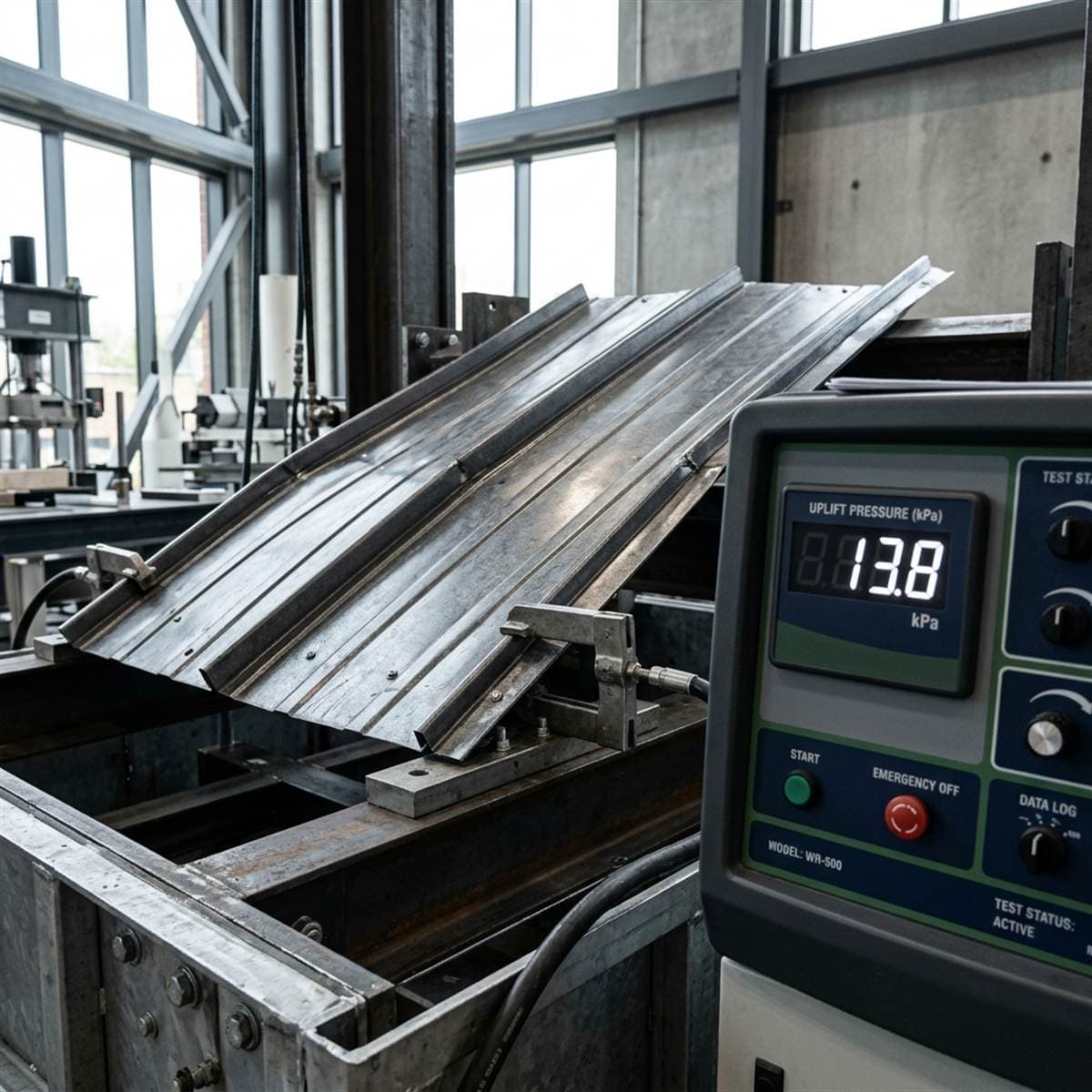
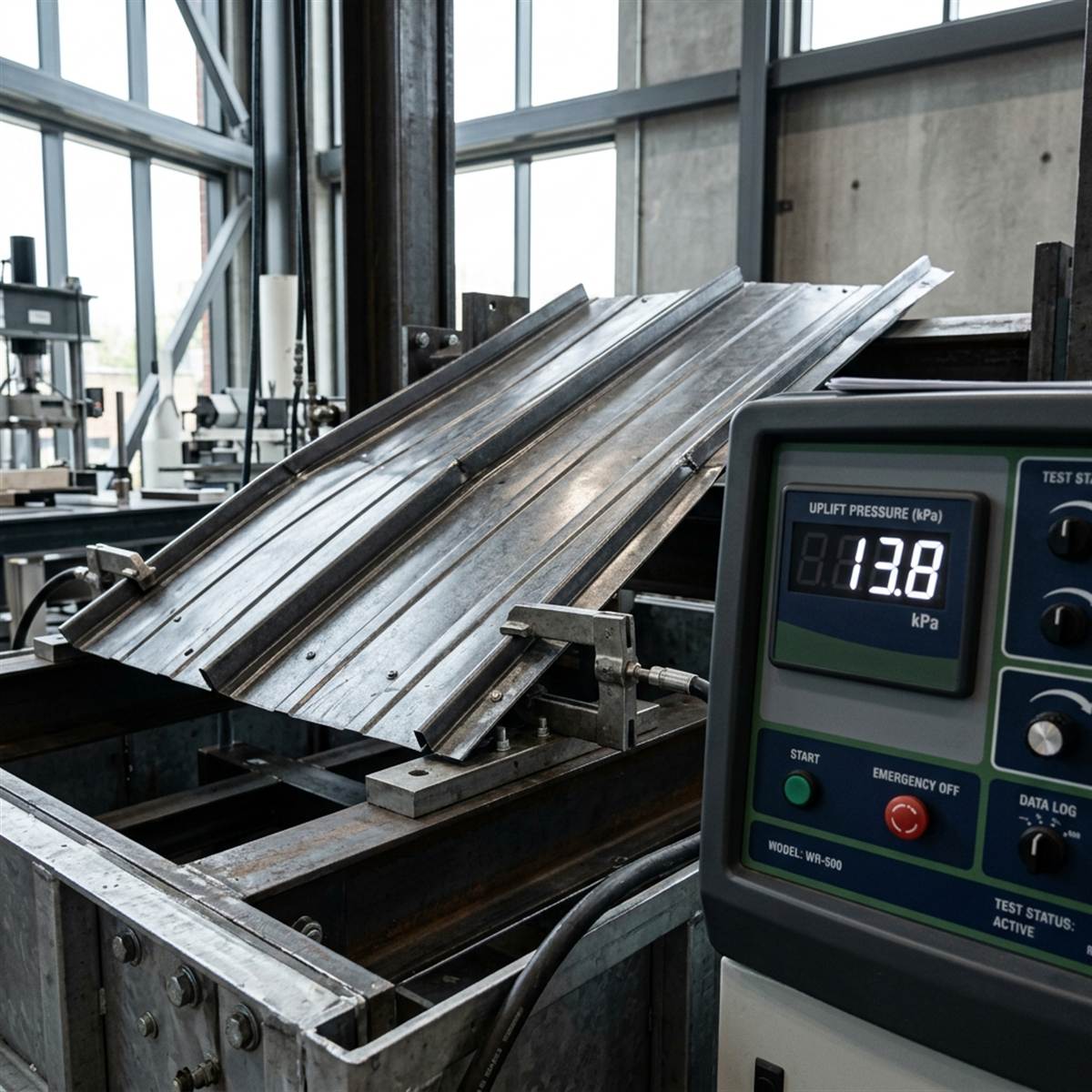
A metal roof assembly must pass structural testing to secure TAS 125 certification:
- Testing Pressures: The assembly is placed in a pressure chamber to test it to its breaking point.
- Fastener Schedules: Clips must be fastened at close, engineered intervals to resist wind forces.
- Approved Components: Decking, underlayments, and panels must all be listed on the product approval sheet.
We install systems that carry approved TAS 125 wind uplift ratings across Palm Beach and Martin counties. Read our guide on Florida Building Code roofing compliance to verify your system.
Frequently Asked Questions
What are TAS 125 wind uplift ratings?
It is a testing standard that certifies metal roofing assemblies can withstand the high wind pressures of South Florida.
Why is compliance with TAS 125 wind uplift ratings required?
In High-Velocity Hurricane Zones (HVHZ), municipal building departments will not issue a permit unless the metal roof assembly is TAS 125 certified.