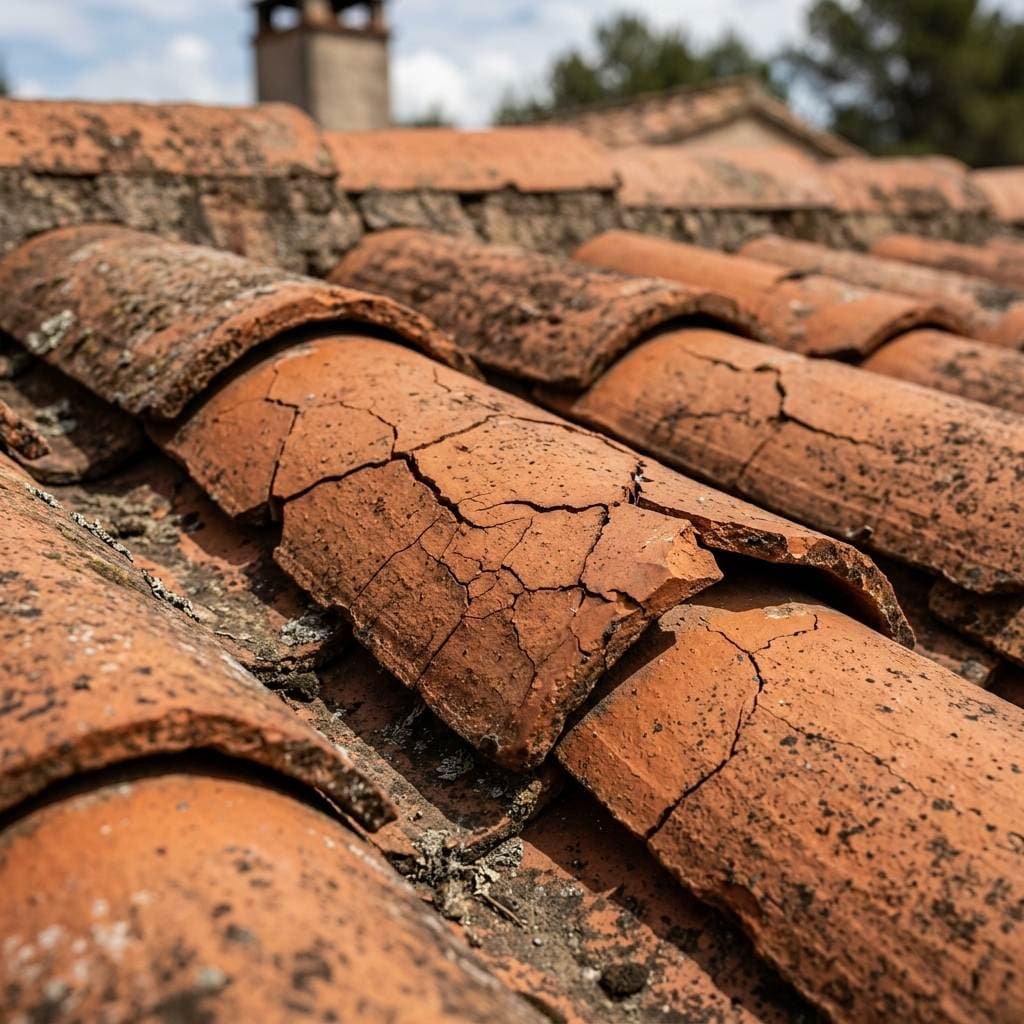
When maintaining a luxury South Florida property, understanding how to spot cracked clay tiles is critical. You must prevent interior water damage before hurricane season hits. These premium systems offer exceptional weather protection and classic Mediterranean curb appeal, but individual tiles will fracture over time. Environmental stress, flying storm debris, and careless foot traffic are the primary killers. We outline a strict checklist to inspect and repair clay tiles. Identify these issues early before water rots out your underlayment and destroys your wood deck.
Common Causes of Damage to clay tiles
Clay is highly durable. It resists rot, insects, and fire. But it is fundamentally brittle. Falling tree branches, wind-driven storm debris, and heavy hail impacts will chip the barrel surface.
Batten board dry rot is another major factor. Batten boards are the wooden strips nailed directly to the deck. Individual tiles are secured to these strips. If water slips past cracked joints, it rots these batten boards. The support wood softens. The tiles lose their anchor, causing them to move, grind against each other, and crack under wind loads.
Additionally, the heavy physical weight of clay tiles makes them fragile if someone walks on them incorrectly. Thermal expansion also causes microscopic stress cracks if the fasteners are driven in too tightly, preventing the units from shifting slightly under the brutal Florida sun.
How to Spot Cracks and Fractures in clay tiles
Homeowners can execute a preliminary visual inspection safely from the ground using binoculars. Scan the roof. Look for displaced pieces, uneven courses, or dark water streaks running along the eaves and fascia boards.
Drone inspection technology is a game-changer. Technicians fly high-definition drones equipped with thermal cameras over the roof. These cameras identify specific temperature differences caused by water trapped underneath the tile. We pinpoint cracks without requiring workers to walk on the fragile surface. Identifying hairline fractures in clay tiles stops leaks dead, especially along the valleys and flashing lines where rainwater volume is massive. If you notice structural sagging or shifted rows, it means the underlying fasteners have backed out or the adhesive foam has degraded.
Repairs and Sealing Damaged clay tiles
You do not always have to replace the entire piece for a minor hairline crack. Roofers deploy high-grade, UV-resistant silicone roof sealants to bond the fractured edges together.
Before applying any silicone, technicians must prep the crack. They use a wire brush to destroy dirt, algae, and loose debris. They wipe the area with denatured alcohol. This bare, clean surface ensures the silicone adhesive forms a permanent, watertight bond. Installers use color-matched sealants. Terracotta colored silicone is highly recommended. These sealants are tinted to match specific shades, ensuring repaired areas remain invisible from the street.
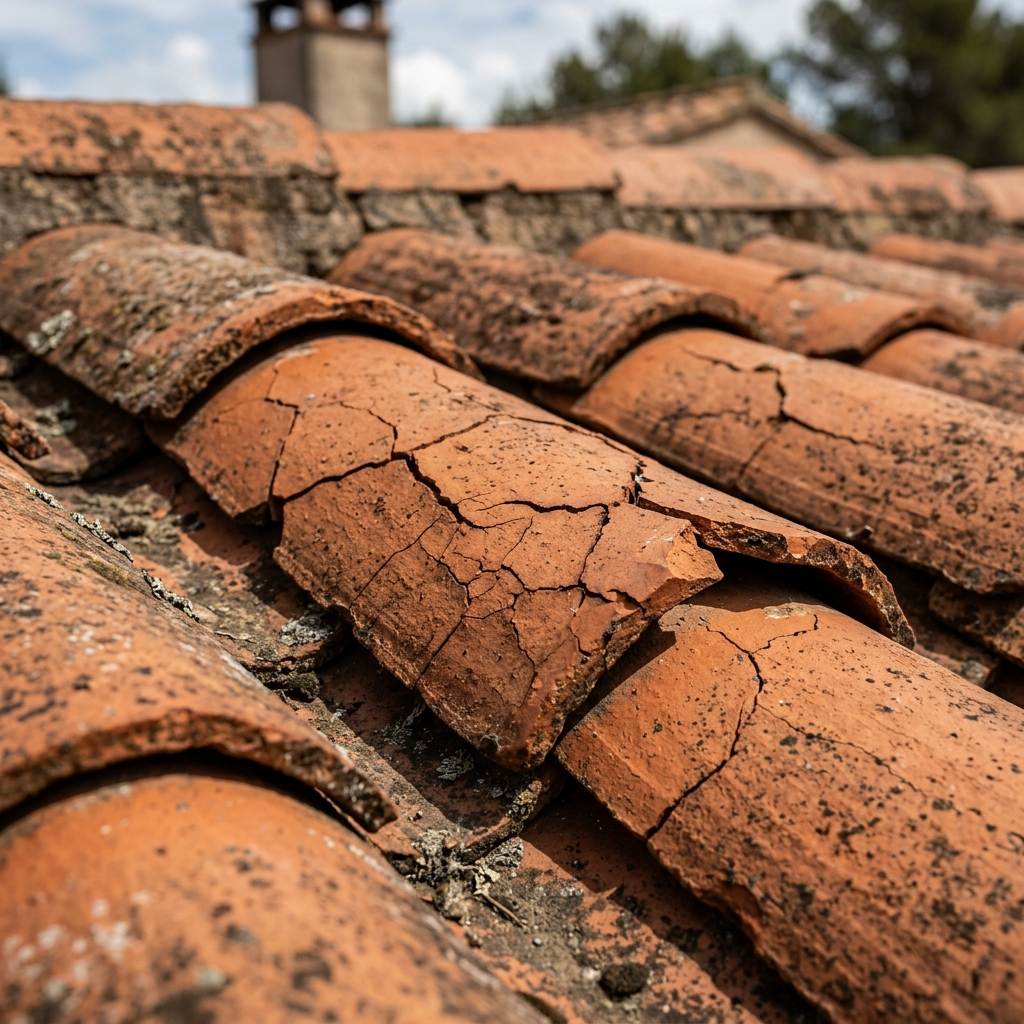
Applying silicone sealants to bond clay tiles prevents water from seeping into the crack. But if a piece is missing or shattered into fragments, a spot replacement is mandatory. Roofers use flat pry bars to lift the surrounding tiles, remove the dead piece, and slide a new matching barrel tile into place. Spot replacing severely damaged clay tiles is the only way to restore complete water protection.
Preventing Future Damage to clay tiles
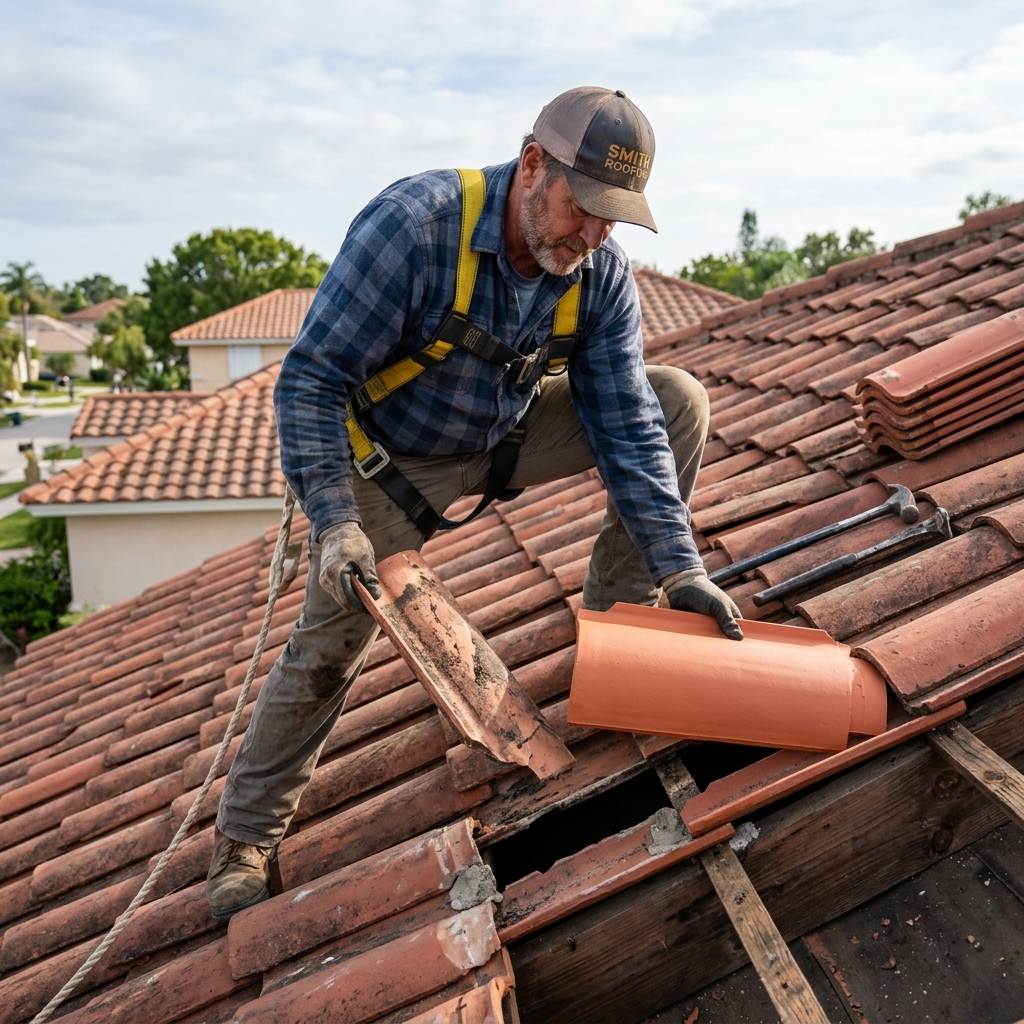
The ultimate way to prevent fractures is to restrict access to your roof. Homeowners should never walk on the tiles to clear debris or hang Christmas lights. Keep off the roof.
Wind uplift during tropical storms is a massive threat. If tiles are even slightly loose, Category 3 winds will cause them to violently flap up and down. This motion causes tiles to smash into adjacent pieces, resulting in chips and fractures. Applying dual-component adhesive foam ribbons beneath the loose edges locks them down against this flapping motion.
If maintenance is required, hire a certified contractor who understands safe walking guidelines. Keeping foot traffic off clay tiles protects the structural glaze and prevents massive replacement bills. Keep your tree limbs trimmed back at least ten feet from the roof line to prevent wind-driven branch impacts.
Plan Your Long-Term Roof Upkeep
Securing early repairs prevents minor cracks from triggering catastrophic wood rot. To protect the wood deck beneath the tiles, learn about the role of the underlayment for a tile roof.
Review our strict checklist for the maintenance requirements of clay tiles to preserve the finish. Compare overall performance against modern steel systems by reading our clay tile roof vs. metal comparison. Take care of your system and save thousands.
Protect the Integrity of Your Estate
Natural clay tiles can last a century, but minor cracks will compromise the waterproofing system if you ignore them. Perform bi-annual inspections and prompt sealant repairs to protect your home’s interior and preserve your investment.
Contact Diversified Roofing Solutions today for a professional inspection of your clay tiles. Our certified team will locate hidden cracks, replace shattered barrels, and ensure your system remains completely watertight.
Contact our local team for certified barrel tile restoration and repair.
Local Service Areas & Regional Coverage
Diversified Roofing Solutions provides certified residential and commercial roofing services across South Florida and the Treasure Coast, including Palm Beach County, Martin County, Broward County, and St. Lucie County.