When upgrading your property, understanding the role of the underlayment for a tile roof is crucial. You must protect your home from water damage. Clay and concrete tiles are highly durable and offer beautiful curb appeal, but they are absolutely not waterproof. High winds will drive water underneath overlapping tiles during severe tropical storms. We explain why the underlayment is the true waterproofing barrier of a tile roof, comparing materials and explaining how self-adhering membranes prevent catastrophic leaks.
The True Waterproofing Barrier of a tile roof
There is a dangerous misconception that clay tiles seal out all water. In reality, tile systems are water-shedding claddings, not waterproof seals. Heavy wind-driven rain easily blows moisture between the interlocking joints. During a tropical storm, severe wind speeds create massive atmospheric pressure differentials between the outside of the building and your attic space.
This pressure differential acts as a powerful pump, forcing rainwater upward through the overlapping joints of the tiles. Once moisture bypasses the outer layer, the dry underlayment on a tile roof is the only thing preventing a leak. In valley sections, water can pool before draining away. If water ponds on cheap paper-based felt, the material will soften, rot, and leak directly into your living room. In contrast, premium synthetic membranes are completely waterproof and resist pooling water without breaking down. This protects your home from toxic mold. If the underlayment is cracked or degraded, water soaks directly into the wood decking, causing severe structural rot and drywall damage.
Types of Underlayment for a tile roof
Because the waterproofing barrier is hidden beneath the tiles, selecting the right underlayment is the most critical decision you will make to secure your tile roof. Installers utilize two primary materials:
- Asphalt-Saturated Felt (30# or 90#): A traditional paper-based option saturated with asphalt, providing only moderate, temporary protection.
- Self-Adhering Synthetic Membranes: A premium polymer-based material coated with a thick adhesive backing that bonds permanently directly to the wood deck.
Felt vs. Synthetic Underlayment for a tile roof
Traditional organic felt underlayment has been the industry standard for decades, but it has severe limitations. Felt is paper-based, meaning it will dry out, curl, and tear over time under the intense heat generated beneath the tiles.
Felt has terribly low UV resistance. During a roof replacement project, if the bare underlayment is exposed to the brutal Florida sun for more than a few days before tiles are loaded, it will wrinkle and lose its water-shedding capabilities entirely. Premium synthetic membranes can remain exposed to UV light for up to 180 days without degrading.
Furthermore, synthetic underlayments feature a textured, slip-resistant top surface. This provides mandatory traction for roofing crews walking on the sloped deck, whereas traditional felt becomes dangerously slippery when dusty or damp. Temperatures underneath the tiles easily exceed 130 degrees, causing traditional felt to degrade rapidly under a hot tile roof. Synthetic membranes are engineered from heavy-duty durable polymers that do not dry rot, crack, or tear. They provide a service lifespan that matches the longevity of the clay itself.
Self-Adhering Membranes for a tile roof
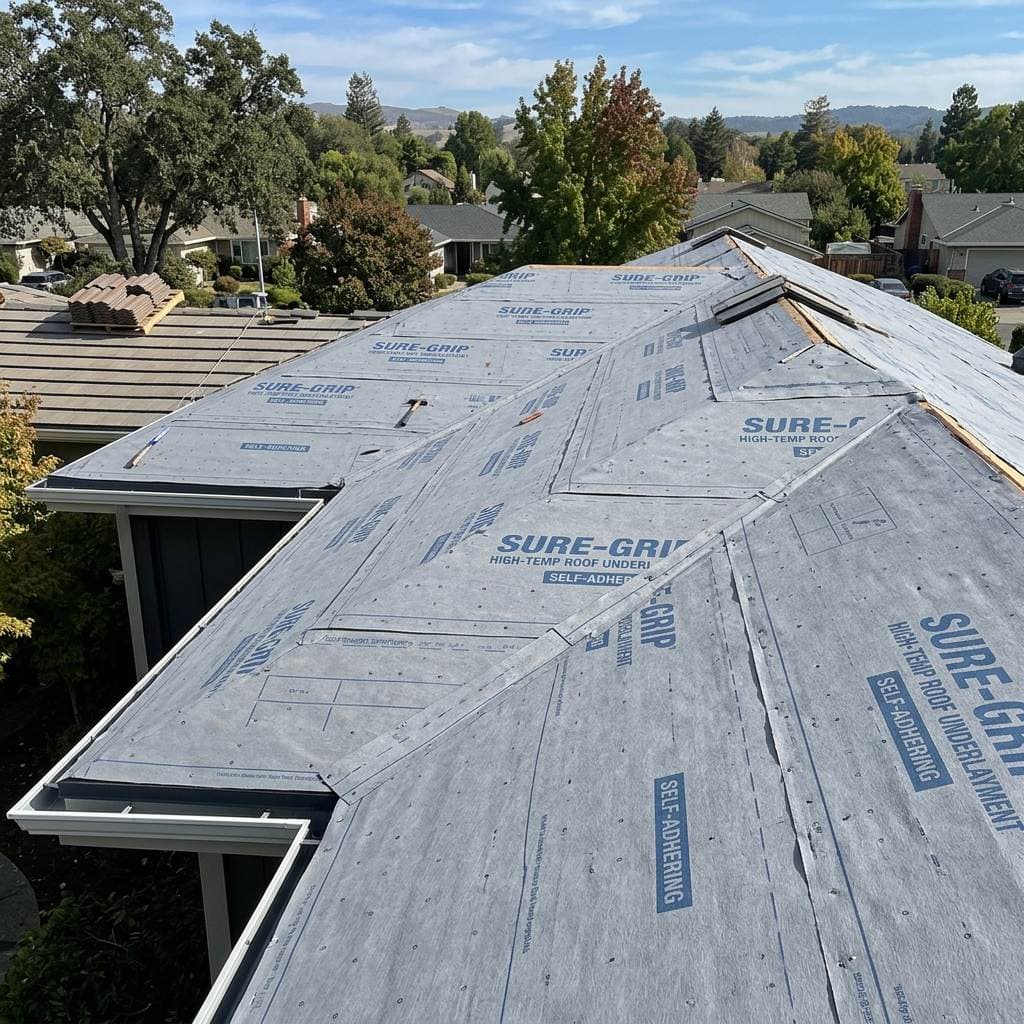
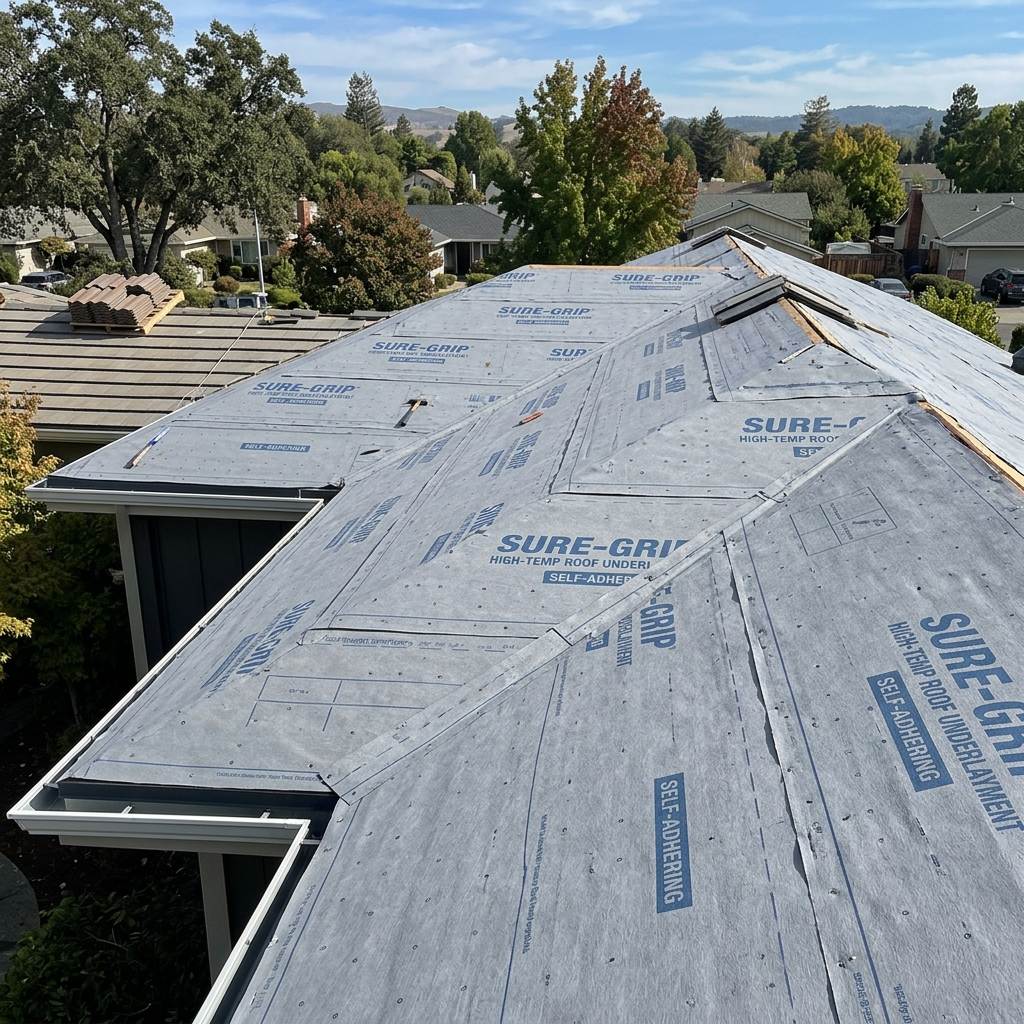
Premium systems demand self-adhering membranes, commonly known as peel-and-stick underlayments. These membranes are hot-applied or self-adhered directly to the plywood deck, creating an aggressive, continuous waterproof seal.
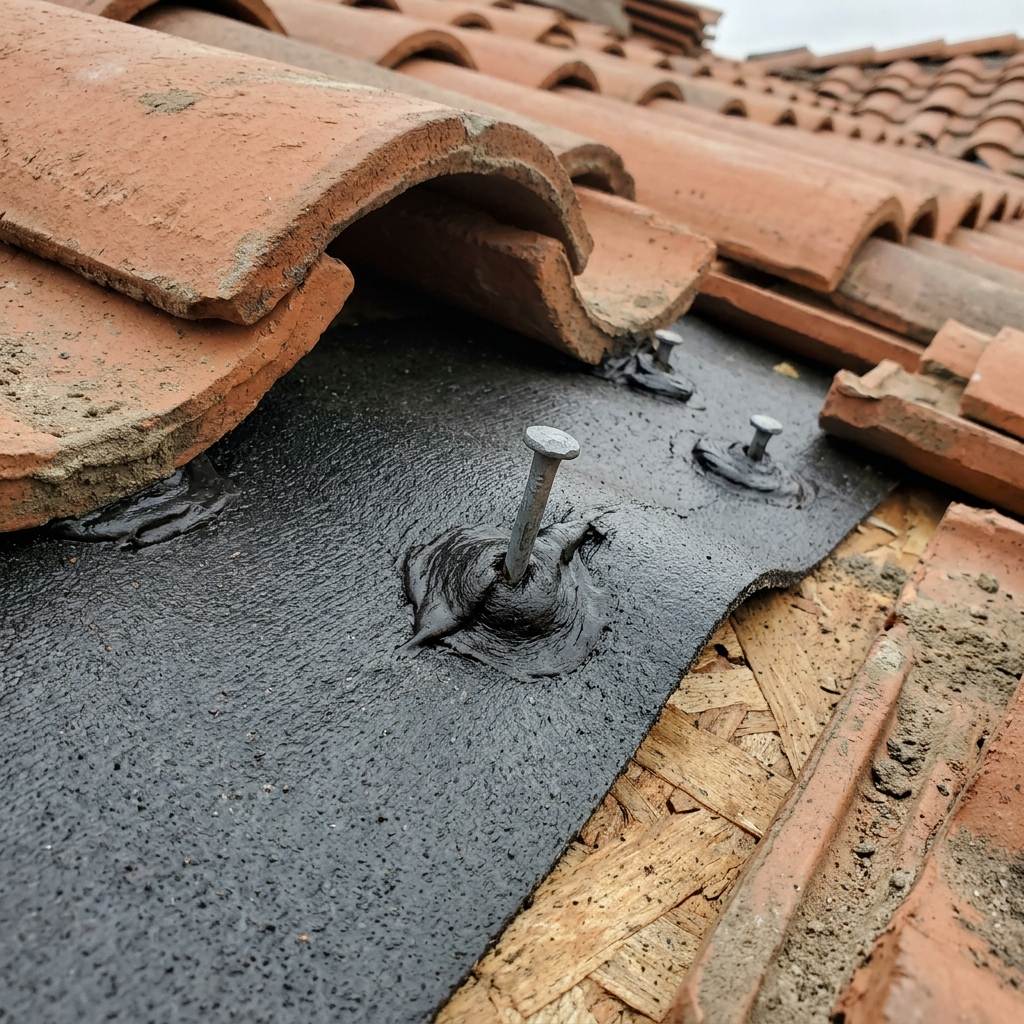
These peel-and-stick membranes are manufactured using rubberized asphalt or modified bitumen blends that have extreme thermal stability. They will not melt, flow, or bleed out under the intense heat of the attic space. This ensures total water tightness. Crucially, self-adhering sheets have self-sealing properties. When fasteners are driven through the membrane to secure the tiles, the thick rubberized asphalt aggressively seals around fasteners on a tile roof to prevent leaks at penetration points. This stops moisture from seeping along screw shanks, ensuring the decking beneath a tile roof remains completely dry.
Plan Your High-Wind Roof Upgrade
Selecting a premium underlayment is the only way to secure your home against storm season. To compare options, read our guide on clay tile roof vs. metal systems.
Explore our strict checklist for the maintenance requirements of clay tiles to extend the lifespan of your system. Learn how to spot cracked clay tiles before water ever reaches the underlayment membrane.
Protect the Foundation of Your Home
While tiles can last up to 100 years, a tile roof is only as good as its underlayment waterproofing barrier. Investing in premium self-adhering synthetic membranes guarantees your home survives Category 5 windstorms, providing long-term security.
Contact Diversified Roofing Solutions today for a free inspection of the underlayment on your tile roof. Our certified team will evaluate your system, explain underlayment options, and provide a detailed report on the health of your waterproofing barrier.
Read about our high-performance underlayments and residential tile roofing specialties.
Local Service Areas & Regional Coverage
Diversified Roofing Solutions provides certified residential and commercial roofing services across South Florida and the Treasure Coast, including Palm Beach County, Martin County, Broward County, and St. Lucie County.